Welcome to the Blog
Education & Stories
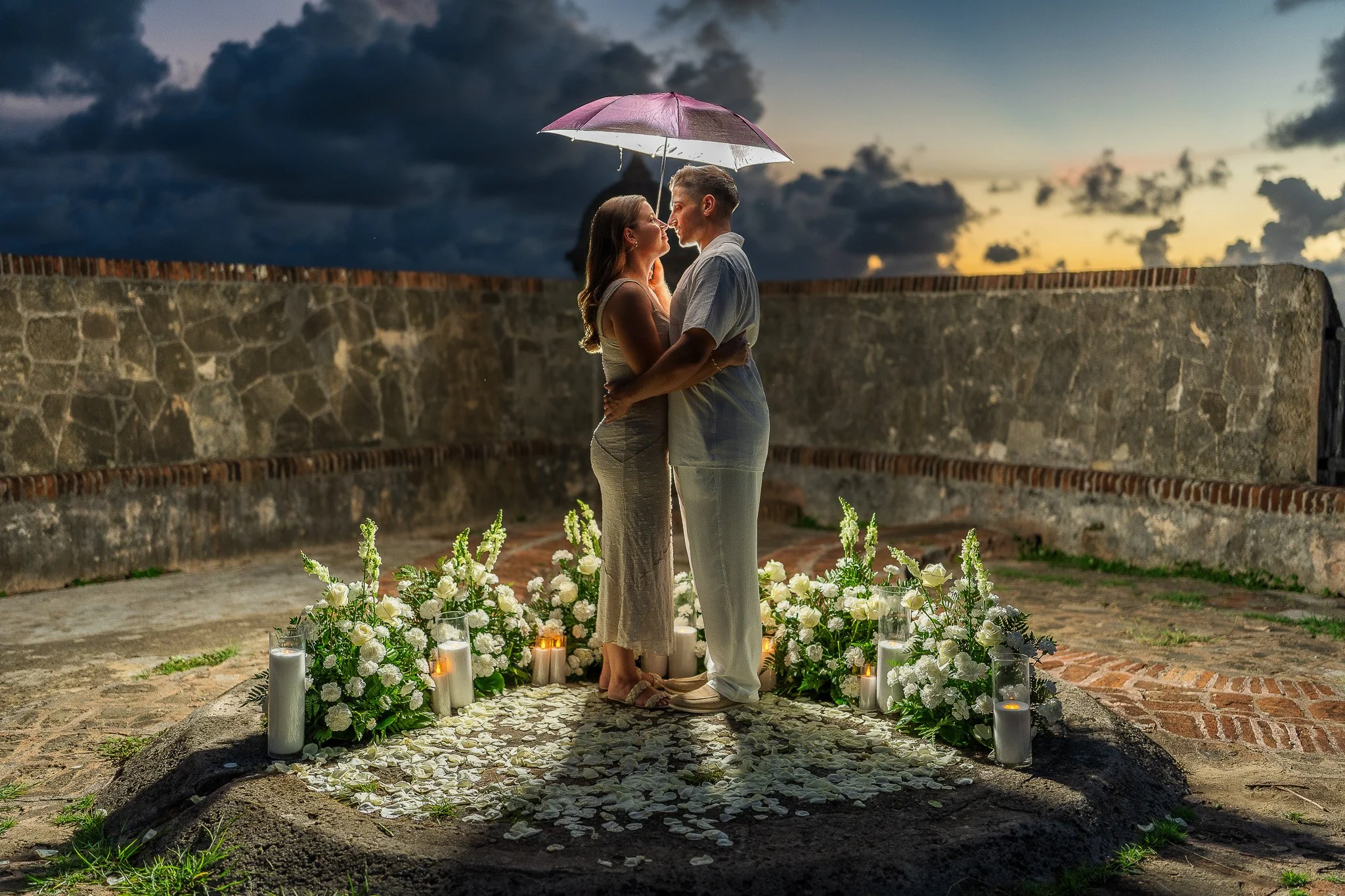
Why I Shoot Prime Lenses for Puerto Rico Elopements and Weddings
Why would a wedding photographer choose prime lenses over versatile zooms? Discover how shooting primes has changed my approach to wedding and elopement photography in Puerto Rico, from low-light performance and subject isolation to image quality, creativity, and the way I see a scene.
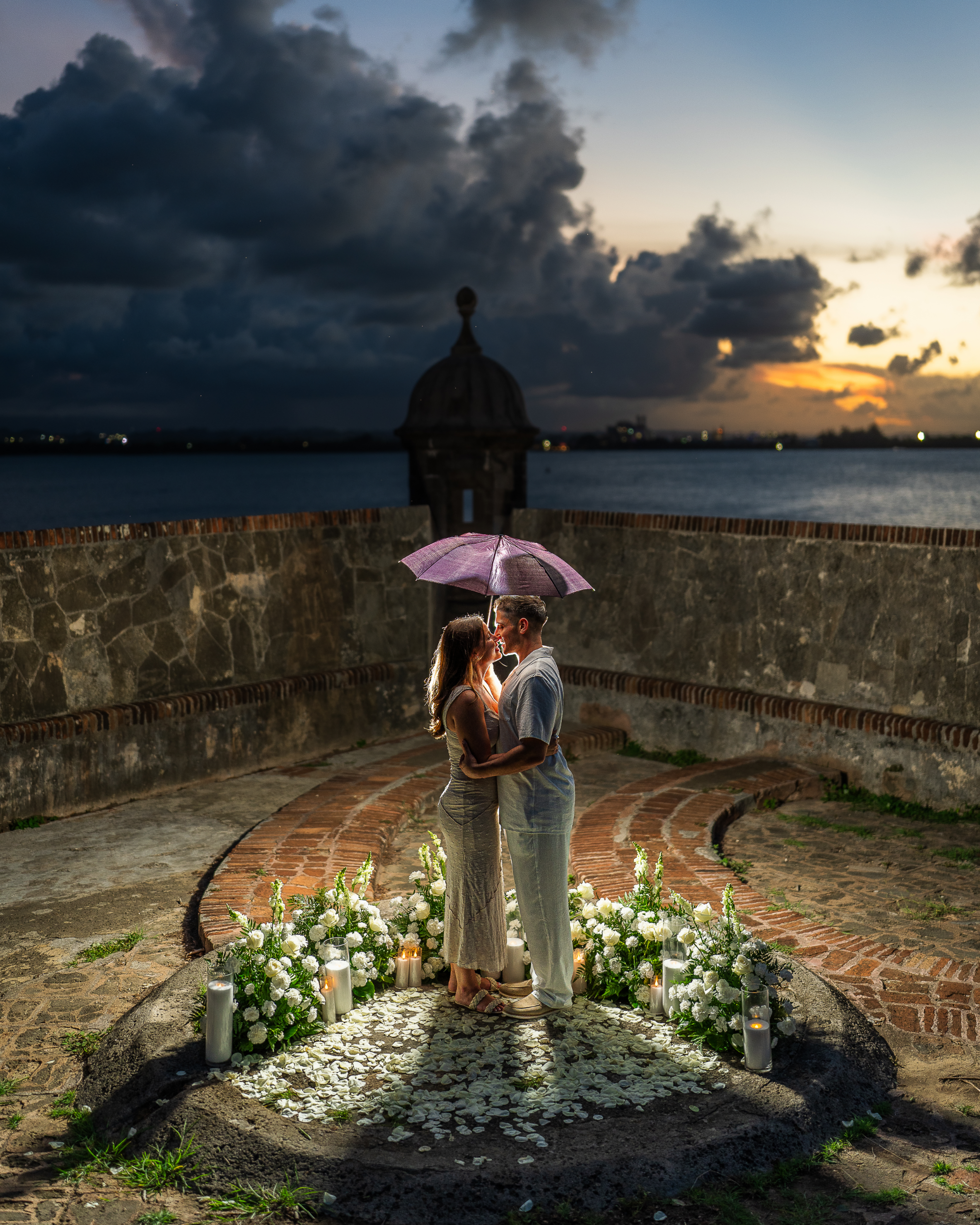
Sometimes the best composition isn't found by turning a zoom ring. It's found by taking a few steps in the right direction.
As a wedding photographer, I've switched from shooting with zoom lenses to only primes.
This came to be because of a conversation I had with a fellow wedding photographer.
We were one day talking about gear, specifically as it pertains to lenses. I asked him which zoom lens he currently had in his kit and he said:
"Not one."
Baffled, I asked him, "Why?"
He immediately said:
"Zooms make me lazy and primes incentivize creativity."
He has been living in my head rent-free ever since.
The more I thought about it, the more it made sense.
As a result, since switching to Sony Alpha, I've had access to a lot more lenses, namely those from Sigma. Moreover, I've bought three primes: the 20mm f/1.4, the 35mm f/1.2, and the 85mm f/1.4.
Granted, I still own a 28-105mm f/2.8, which is fantastic, but I find myself reaching for primes 99.9% of the time.
And the more I shoot with them, the more I understand why.
Prime Lenses vs. Zoom Lenses for Wedding Photography
Before I go any further, I want to make something very clear: I don't think zoom lenses are bad.
Quite the opposite.
Modern professional zoom lenses are phenomenal pieces of optical engineering. A good 24-70mm, 24-105mm, or 28-105mm can produce incredible images while giving a photographer an enormous amount of flexibility.
For wedding photography, that versatility can be incredibly valuable.
Wedding days move quickly. A ceremony can go from a wide composition showing the entire setting to an emotional close-up within seconds. During a reception, you might be photographing a couple dancing one moment and then need to capture a guest's reaction from across the room the next.
A zoom lens allows you to change your framing without changing your position.
That's a huge advantage.
Prime lenses, however, force you to approach photography differently.
Instead of changing your focal length, you change your position.
Instead of zooming in, you walk closer.
Instead of zooming out, you step backward.
And that seemingly small difference can fundamentally change the way you photograph a wedding or elopement.
The Biggest Advantage of Zoom Lenses: Versatility
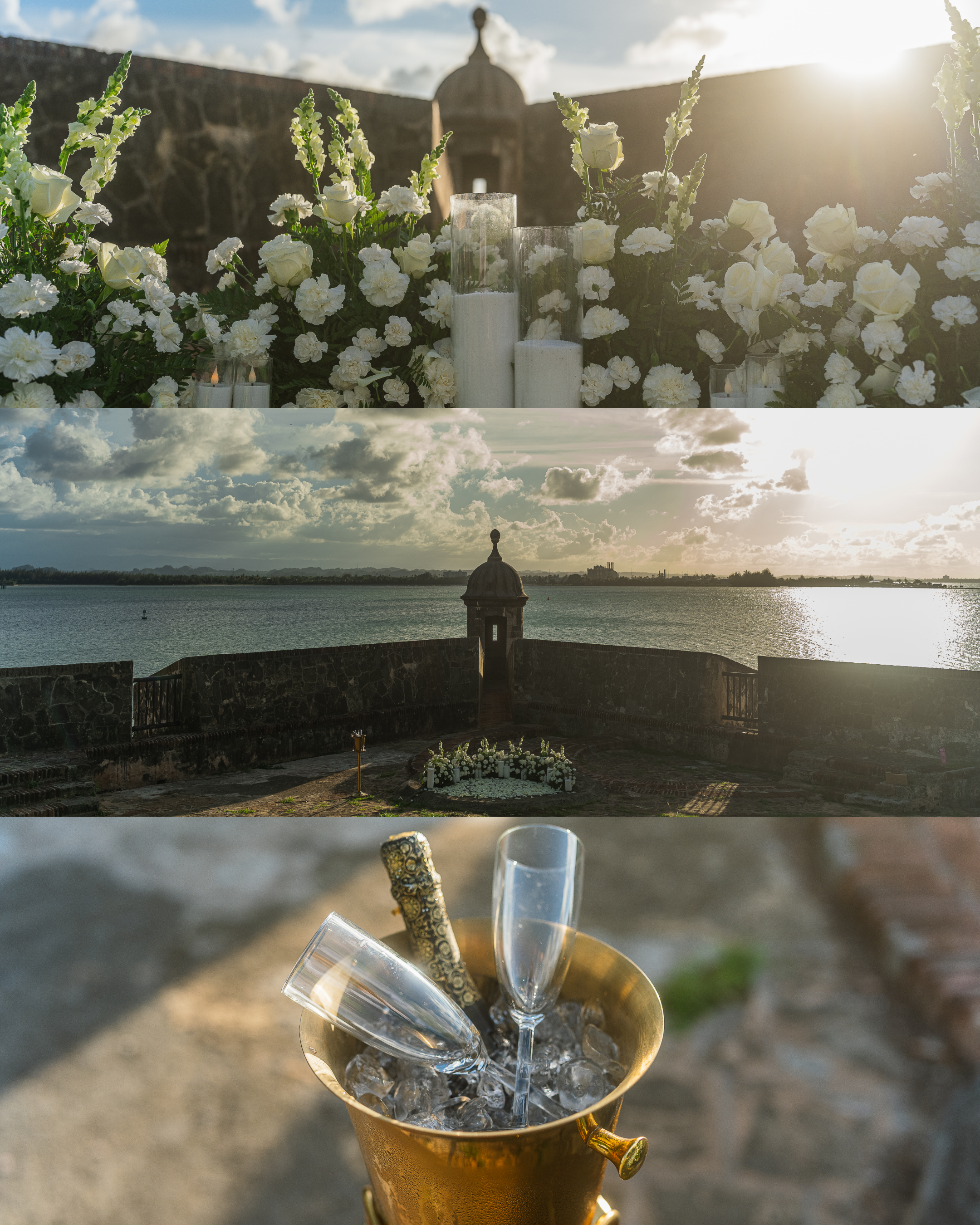
Shooting with a 35mm prime forces me to get closer, interact more, and become part of the moment rather than simply documenting it from a distance.
The biggest advantage of a zoom lens is obvious: versatility.
A single zoom can cover several different photographic perspectives. At a wider focal length, you can photograph a couple within a dramatic landscape. At a more moderate focal length, you can create a natural perspective. At the longer end, you can create a tighter portrait and isolate your subjects.
You don't need to change lenses.
You don't necessarily need to move.
And you don't have to worry about potentially missing a moment while switching lenses.
For a wedding photographer working under extremely fast-paced conditions, that can be incredibly useful.
Zoom lenses can also reduce the amount of gear you need to carry. Instead of bringing several primes, a photographer can potentially cover an enormous range of focal lengths with two or three zoom lenses.
There is also something to be said for efficiency.
When you're photographing a wedding with hundreds of guests, multiple locations, changing lighting conditions, and a timeline that can change at any moment, the ability to react quickly matters.
This is where zoom lenses excel.
But Zooms Can Also Make You Lazy
And this brings me back to that conversation.
"Zooms make me lazy and primes incentivize creativity."
The more I photograph with primes, the more I understand what my friend meant.
When you have a zoom lens mounted on your camera, it's incredibly easy to stand in one place and simply change your focal length.
Too wide?
Zoom in.
Too tight?
Zoom out.
Need a different composition?
Turn the zoom ring.
There's absolutely nothing wrong with doing this. It's part of why zoom lenses exist.
But when I started shooting with primes, I realized how often I had been allowing the lens to make compositional decisions for me.
A prime doesn't give you that option.
If I'm shooting with my 85mm and want a wider composition, I can't simply twist a ring.
I have to move.
If I'm shooting with my 20mm and want the couple to occupy more of the frame, I have to physically get closer.
That forces me to think about perspective, distance, composition, foreground, background, and the relationship between my subjects and their environment.
And that, to me, is where primes become much more than just lenses.
They become creative tools.
Aperture Matters More Than You Think
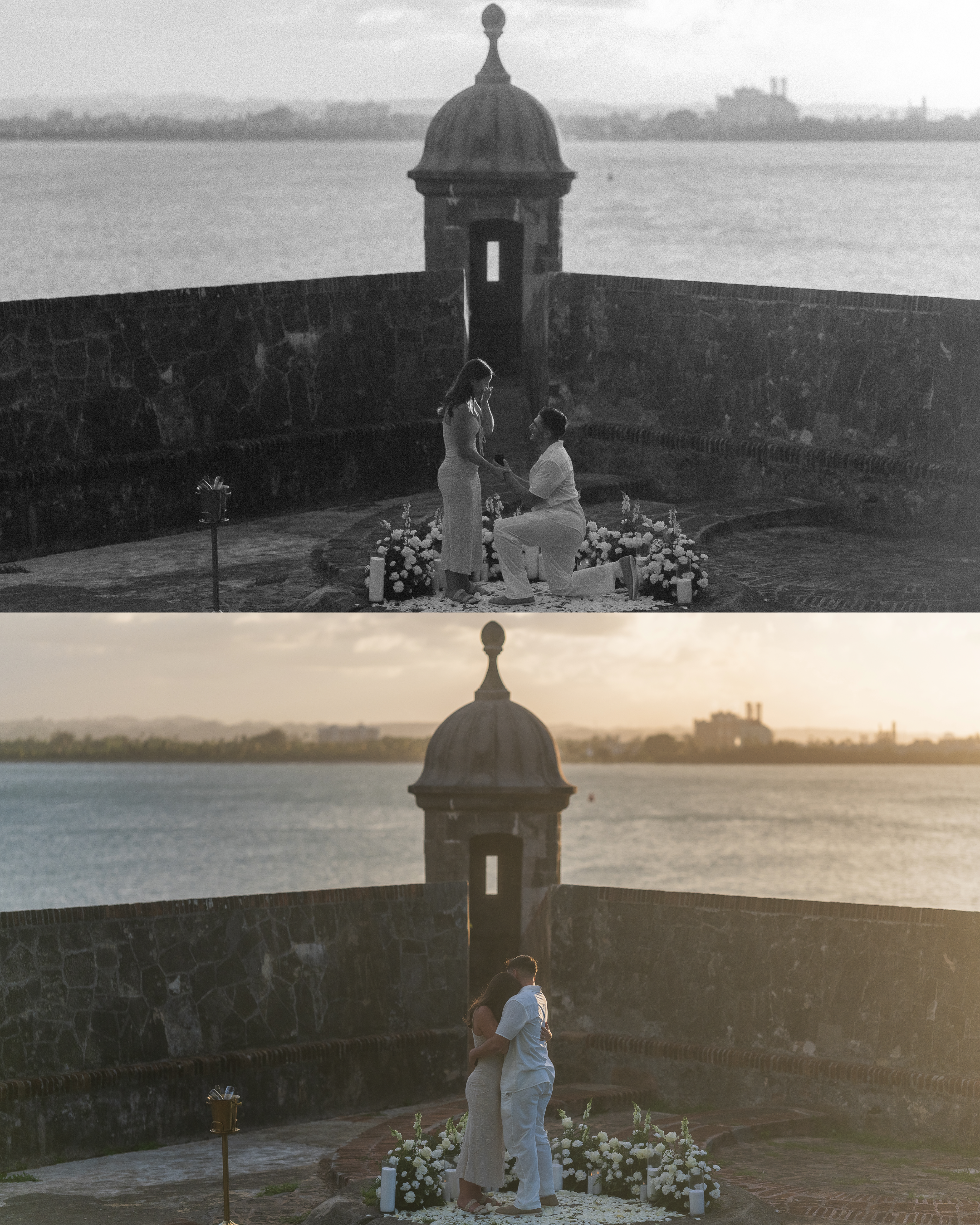
Puerto Rico gives me plenty to work with. The architecture, the colors, the Caribbean light, and the landscapes all become part of the photograph.
One of the biggest advantages of shooting primes for wedding and elopement photography is aperture.
My three primary primes are the Sigma 20mm f/1.4, Sigma 35mm f/1.2, and Sigma 85mm f/1.4.
Those apertures aren't just numbers printed on the side of a lens.
They fundamentally change what I can do with available light.
A wider aperture allows the lens to gather more light, which becomes particularly valuable when photographing weddings in challenging lighting conditions.
And Puerto Rico presents plenty of those situations.
A beautiful outdoor ceremony might take place under intense Caribbean sunlight. A couple may then move into a shaded historic street in Old San Juan. Later, portraits might happen during blue hour. Then the reception begins indoors, where the available light drops dramatically.
The ability to open a lens to f/1.2 or f/1.4 gives me significantly more flexibility.
I can maintain a lower ISO when appropriate.
I can use faster shutter speeds when I need them.
And I can continue working creatively in situations where a slower lens might force me to compromise.
This becomes especially important during elopements because the goal isn't simply to record what happened.
I'm trying to create something beautiful from whatever light is available.
Low-Light Performance in Puerto Rico
Puerto Rico has incredible natural light, but wedding photography isn't limited to golden hour.
Some of the most emotional photographs happen when the sun goes down.
Imagine a couple walking through Old San Juan after sunset. Imagine a candlelit dinner. Imagine a first dance under dim reception lighting. Imagine an intimate moment between a newly married couple while everyone else is celebrating around them.
These aren't necessarily environments where you have an abundance of light.
This is where fast primes become particularly useful.
A lens capable of opening to f/1.2 or f/1.4 allows me to work with available light in a way that simply isn't possible with slower apertures.
That doesn't mean I never use flash.
I love flash photography, and lighting is a major part of my creative process.
But having a fast prime means I have another option. Instead of relying entirely on artificial light, I can use the ambient light as part of the photograph.
That's a very different aesthetic.
Rather than fighting the darkness, I can incorporate it.
The Look of a Wide Aperture
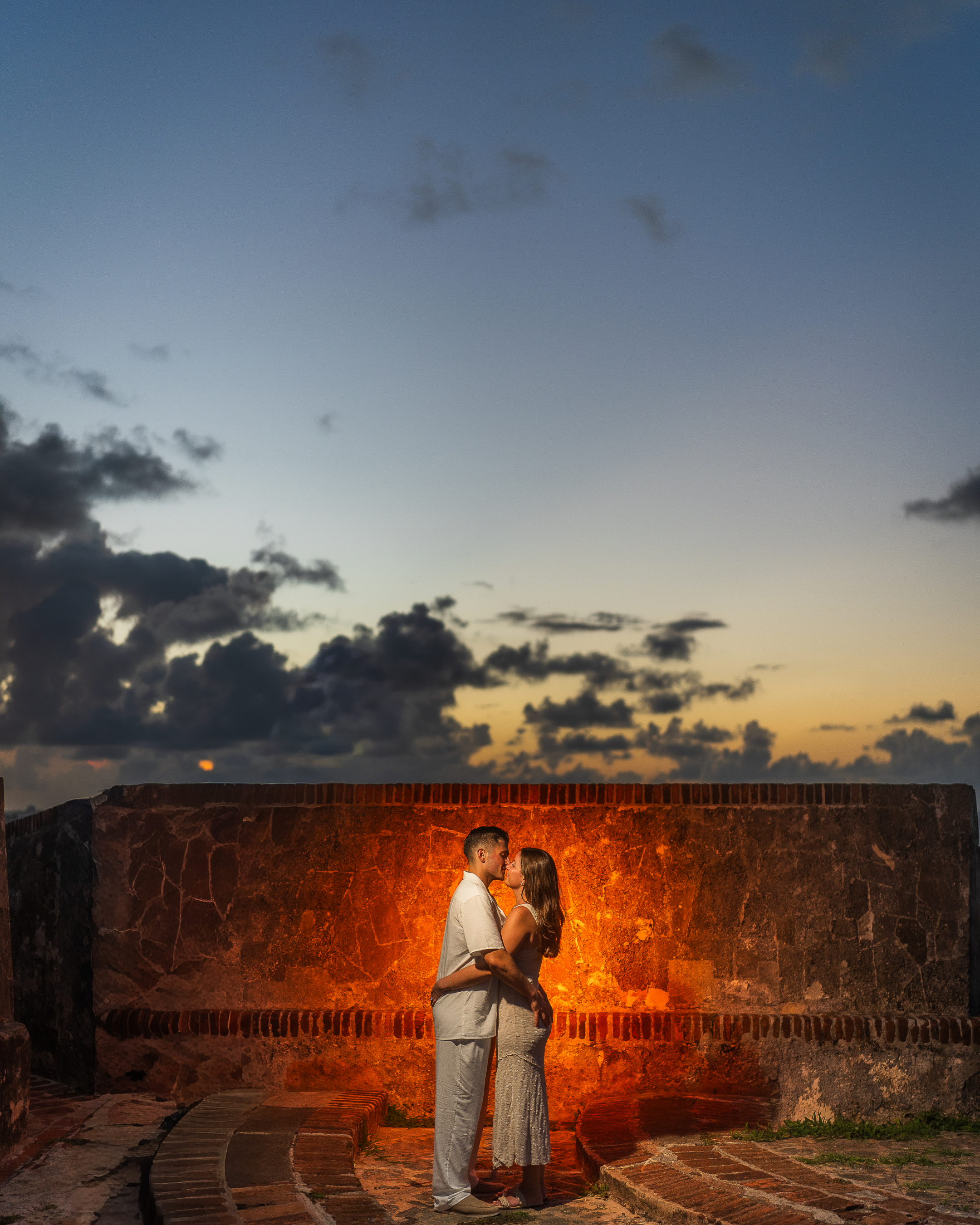
The 85mm f/1.4 is one of my favorite tools when I want to strip away distractions and put all the attention where it belongs: on the couple.
There is another reason I love shooting wide open: subject isolation.
When photographing couples, I want the viewer's attention to go exactly where I intend it to go.
Sometimes that's the couple.
Sometimes it's an expression.
Sometimes it's a hand holding a wedding ring.
Sometimes it's the bride's eyes.
A wide aperture can help separate the subject from the background, creating a shallower depth of field and a more pronounced sense of separation.
This can be particularly beautiful during an elopement because Puerto Rico provides incredible environments to work with.
Old San Juan has colorful architecture, cobblestone streets, balconies, doors, and historic buildings.
The beaches provide endless horizons, palm trees, water, and dramatic skies.
The mountains offer layers of landscape and atmospheric depth.
A fast prime allows me to photograph those environments while still making the couple the visual focal point.
The environment doesn't disappear.
It simply becomes part of the story.
Image Quality: Are Primes Actually Better?
This is where things get a little more nuanced.
It would be easy to say that prime lenses are simply sharper than zoom lenses.
That's not entirely accurate.
Modern professional zoom lenses can be exceptionally sharp. Some are so good that the difference between a high-quality zoom and a high-quality prime may be difficult to distinguish in real-world wedding photography.
But primes still have some important advantages.
Because a prime lens is designed around a single focal length, optical engineers can optimize its construction specifically for that perspective.
This can contribute to excellent sharpness, contrast, rendering, and overall optical performance.
And when you're combining that with extremely wide apertures, the result can be a very distinctive image.
For me, however, image quality isn't simply about pixel-level sharpness.
It's about how the photograph feels.
It's about contrast.
It's about depth.
It's about how the background renders.
It's about how light interacts with the lens.
And ultimately, it's about whether the photograph makes someone stop scrolling and actually look at it.
The twenty millimeter for Environmental Storytelling
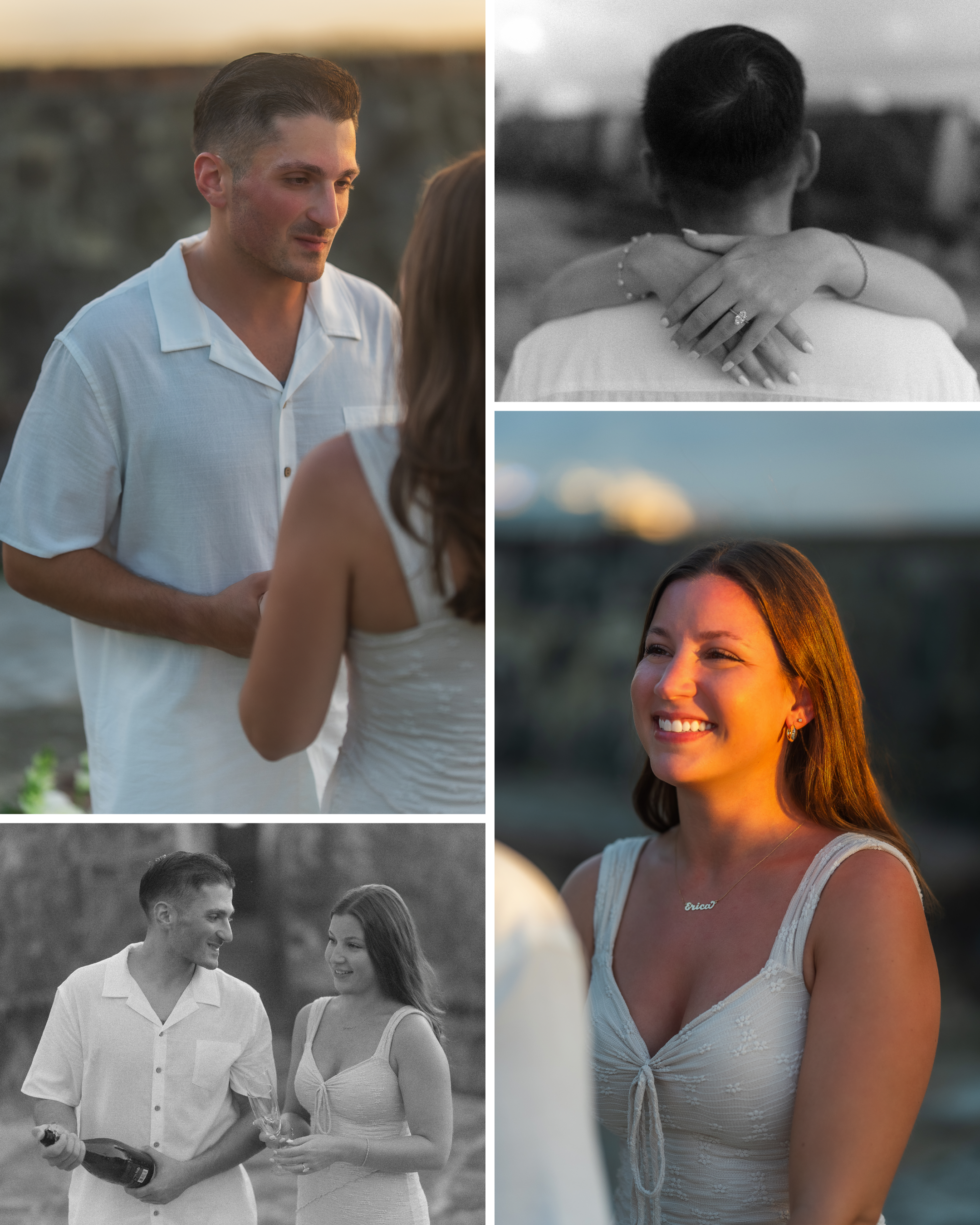
A prime lens doesn't give you every answer. Sometimes that's exactly the point.
My Sigma 20mm f/1.4 is an interesting lens because it's extremely wide, but that doesn't mean I use it simply to make everything look wider.
I use it for storytelling.
When I'm photographing an elopement in Puerto Rico, the location is often an important part of the experience.
The couple didn't travel thousands of miles to photograph themselves against a blank wall.
They came to Puerto Rico.
They came for the Caribbean light, the architecture, the ocean, the mountains, the history, the colors, and the atmosphere.
The 20mm allows me to put the couple into that environment.
It lets me exaggerate perspective, get close to my subjects, and create photographs where the location becomes part of the story.
But it also forces me to think carefully.
At 20mm, you can't simply point the camera at something and expect the photograph to work.
You have to pay attention to the edges of the frame.
You have to understand perspective.
You have to be conscious of where you place people.
You have to get close.
And getting close can create a completely different relationship between the photographer and the couple.
The thirtyfive millimeter: My Creative Sweet Spot
The 35mm focal length has become one of my favorite perspectives for wedding and elopement photography.
It is wide enough to show the environment but intimate enough to feel connected to the people inside the frame.
And when you combine that focal length with an f/1.2 aperture, it becomes an incredibly powerful creative tool.
The 35mm allows me to photograph a couple walking through Old San Juan, standing beneath a historic archway, sharing a quiet moment during their wedding day, or simply interacting naturally without making the photograph feel overly compressed.
It's also an excellent focal length for storytelling.
When I'm photographing an elopement, I don't just want portraits.
I want moments.
I want the little interactions between the big moments.
I want the way a couple looks at each other when they think nobody is watching.
I want the environment around them.
I want movement.
And I want the photograph to feel like you could step into it.
That's what the 35mm does exceptionally well for me.
The eightyfive millimeter: Compression and Intimacy
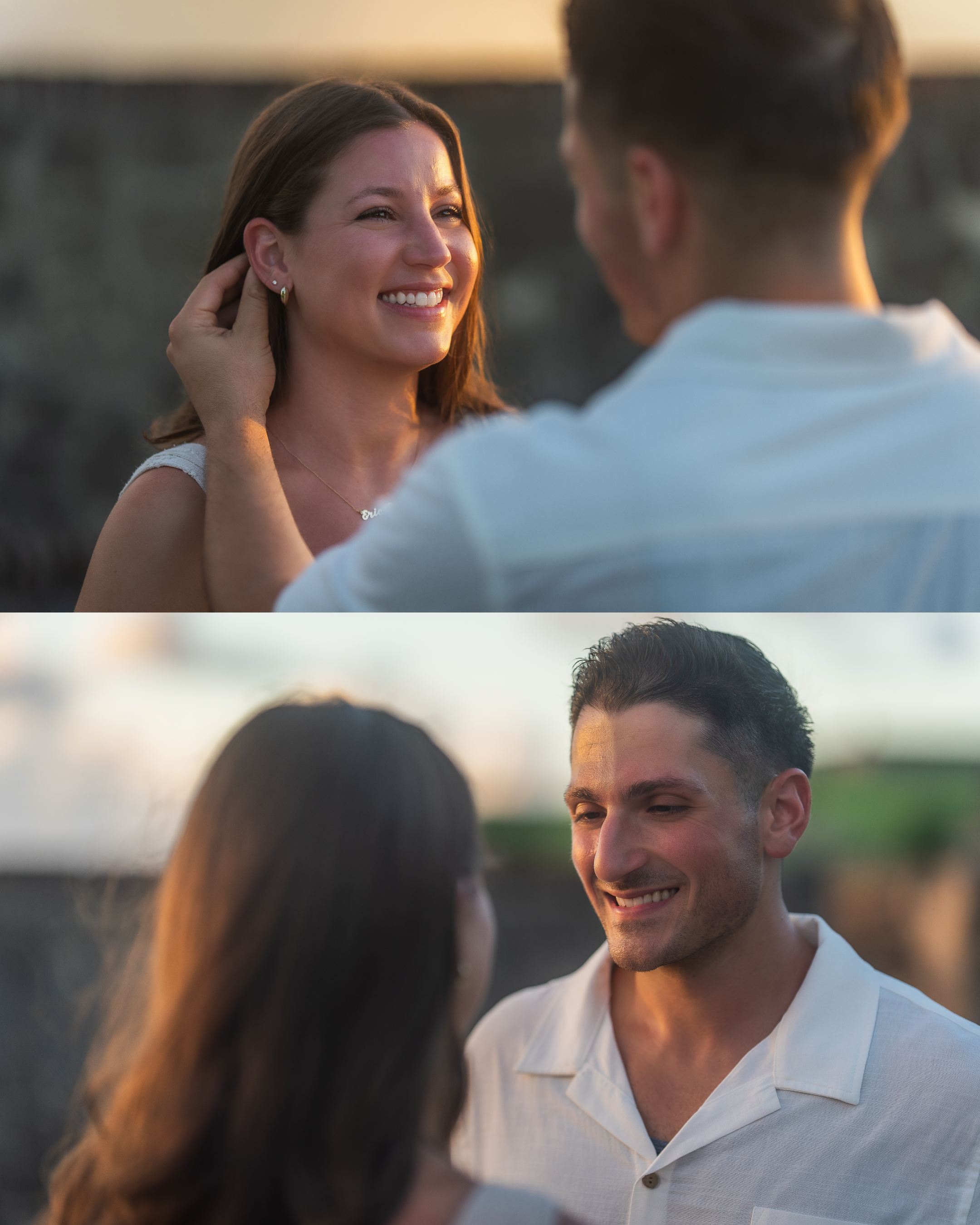
There's something incredibly satisfying about knowing exactly what a lens sees and learning how to make that perspective work for you.
Then there's the 85mm.
If the 35mm is about storytelling, the 85mm is about intimacy.
An 85mm lens allows me to isolate my subjects while compressing the background in a beautiful way.
This is especially useful for portraits.
A couple standing on a beach can suddenly become the unmistakable center of the photograph.
A busy street can transform into a soft, colorful background.
A mountain landscape can become layers of beautiful compression behind the couple.
And at f/1.4, that separation can become even more pronounced.
The 85mm also allows me to maintain some physical distance from the couple, which can sometimes produce more natural expressions.
Instead of being right in their faces, I'm able to give them a little space.
That can make a difference.
Some of the best photographs happen when couples forget they're being photographed.
Primes Force Me to Move
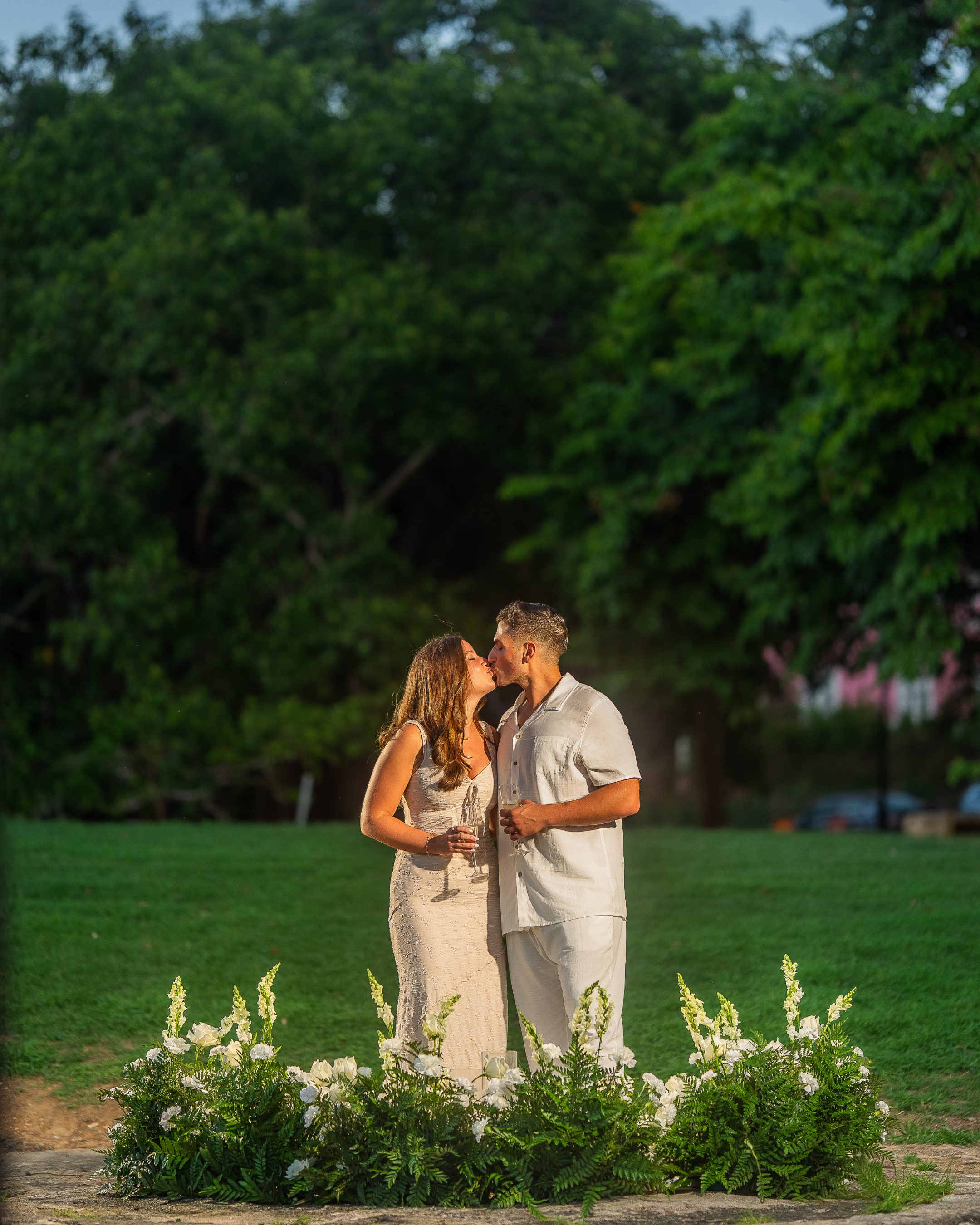
Getting physically closer to your subjects can change more than your composition. It can change the feeling of the photograph entirely.
Perhaps the biggest change I've experienced since switching to primes isn't technical at all.
It's physical.
I move more.
A lot more.
If I'm photographing with my 35mm and want a tighter portrait, I walk toward my subjects.
If I want more environmental context, I walk backward.
If the composition isn't working, I don't zoom.
I reposition myself.
That sounds incredibly simple, but it has changed the way I see photographs.
Instead of asking, "What focal length do I need?"
I'm asking, "Where do I need to be?"
That's a very different question.
And I think it makes me a better photographer.
Primes Incentivize Creativity
This is ultimately what my photographer friend meant.
Primes incentivize creativity because they introduce limitations.
And limitations can be incredibly useful.
When you have every focal length available, you can solve almost every compositional problem by changing the focal length.
When you have a 35mm lens, you have to figure out how to make the 35mm work.
That constraint forces creativity.
It makes me experiment.
It makes me look for different angles.
It makes me move.
It makes me think about foreground and background.
It makes me consider perspective.
And most importantly, it makes me engage with the environment rather than simply changing my lens settings until the composition looks right.
The Downsides of Shooting Primes
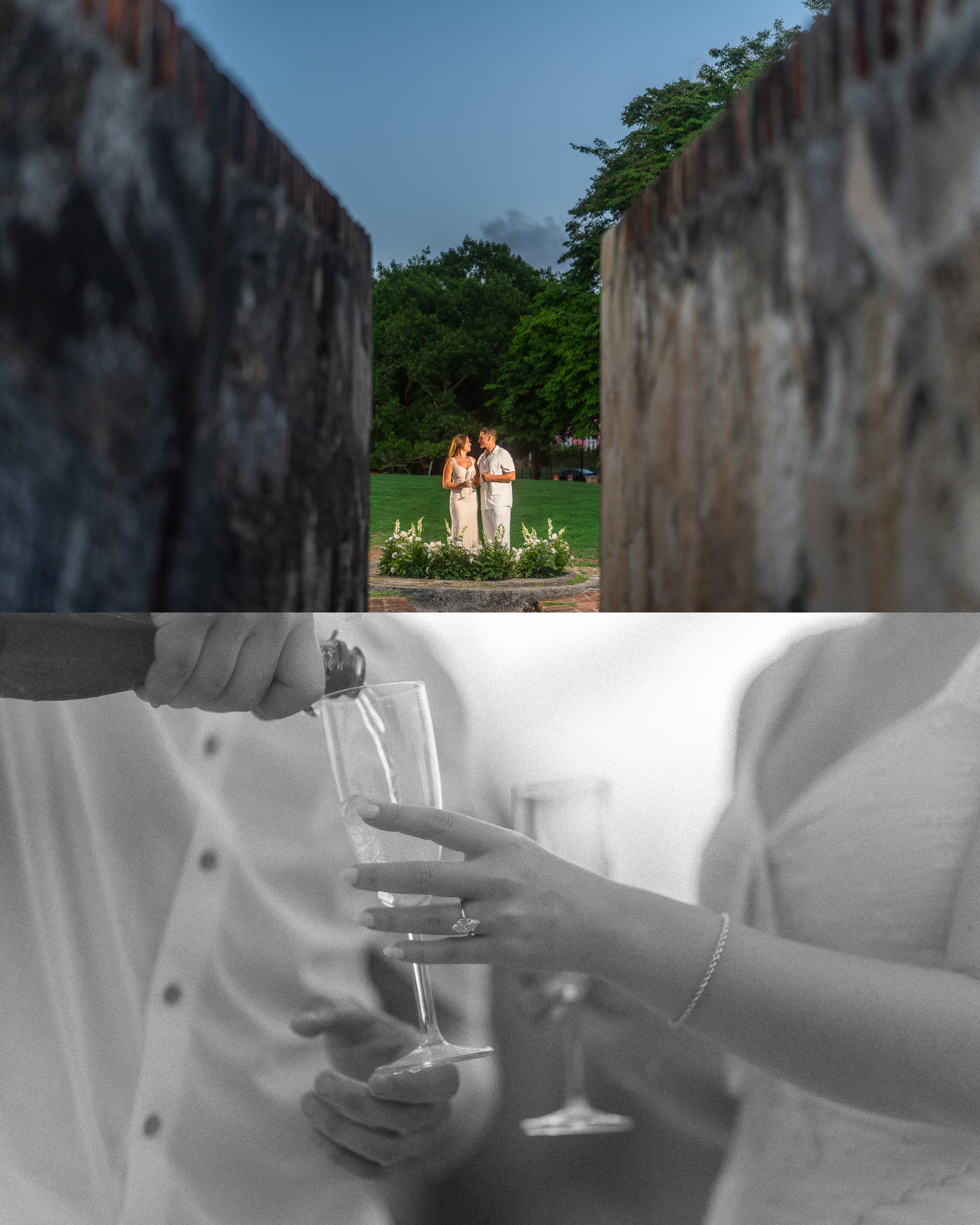
Some of my favorite photographs happen when I'm forced to slow down, look around, and find the image instead of simply zooming until I find a frame.
Of course, there are disadvantages.
I'm not going to pretend there aren't.
The biggest one is versatility.
A zoom lens can cover an enormous range of focal lengths without requiring a lens change.
With primes, I have to choose my perspective before I start shooting.
If I'm carrying my 20mm, 35mm, and 85mm, I have three lenses that cover three very different perspectives.
That means I either need to carry multiple camera bodies or be willing to change lenses.
During a wedding, that can be inconvenient.
There are also situations where a zoom simply makes more sense.
If I'm photographing a ceremony from a fixed position, for example, a 70-200mm can be incredibly useful.
If I'm photographing from the back of a church, I may not have the ability to physically move closer.
If I'm working in a rapidly changing environment, the flexibility of a zoom can save the day.
And this is why I haven't completely abandoned zooms.
I still own my 28-105mm f/2.8.
It's a fantastic lens.
But the fact that I own it doesn't mean I have to use it for everything.
Why I Still Keep a Zoom in My Bag
There is something to be said for having the right tool available even if it isn't the tool you reach for most often.
My 28-105mm f/2.8 is essentially my insurance policy.
If I know I'm going into a situation where versatility matters more than creativity, it's there.
If I need to react quickly, it's there.
If I'm working from a fixed position, it's there.
And if conditions change unexpectedly, I have an incredibly capable lens that can handle it.
That's the beauty of photography.
There isn't one correct way to photograph a wedding.
There isn't one correct focal length.
There isn't one correct camera system.
There isn't even one correct definition of what a "professional" kit should look like.
The best gear is ultimately the gear that allows the photographer to create the work they want to create.
For me, right now, that's primes.
Why This Matters for Puerto Rico Elopement Photography
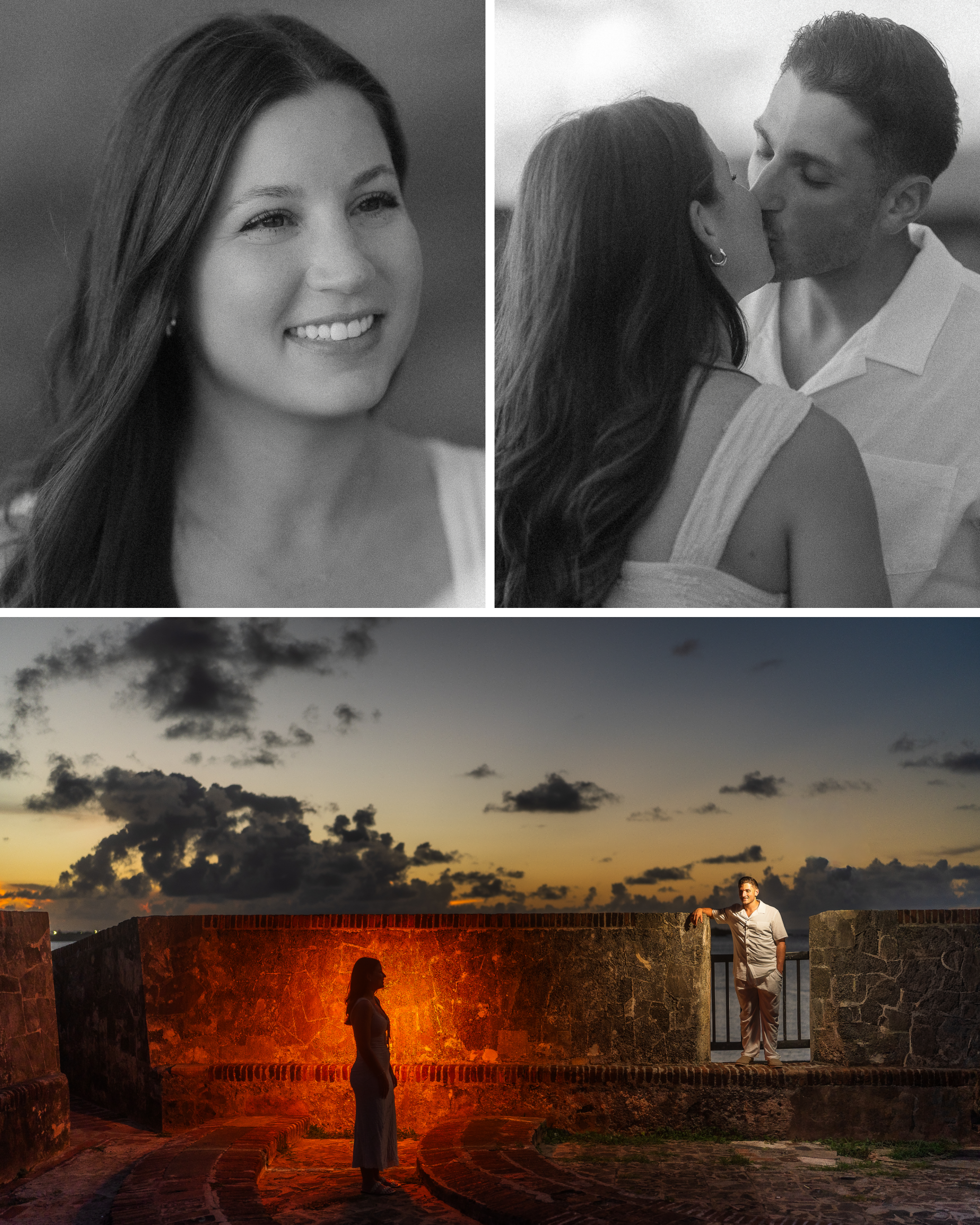
Gear matters, but the way you use it matters more. Sometimes limiting your options is exactly what you need to become more creative.
At first glance, all of this might sound like an overly technical discussion about lenses.
But for couples planning an elopement in Puerto Rico, the equipment I use ultimately matters because of what it allows me to create.
An elopement is different from a traditional wedding.
There may be fewer people.
There may be fewer formalities.
There may be more flexibility.
And there is often a much stronger emphasis on the experience itself.
That's exactly the kind of environment where I love working with prime lenses.
If we're walking through Old San Juan, I want to be able to create photographs that show the architecture while keeping you connected to each other.
If we're on a beach at sunset, I want to create intimate portraits with beautiful subject separation.
If we're exploring a mountain location, I want to incorporate the landscape without allowing it to overwhelm the photograph.
If we're photographing after sunset, I want the ability to take advantage of whatever ambient light is available.
And if something unexpected happens, I want to be physically engaged enough to see it and react to it.
The lens becomes part of that process.
The Camera Is a Tool. The Lens Changes How You See.
Ultimately, this entire transition started with one sentence.
"Zooms make me lazy and primes incentivize creativity."
I didn't immediately agree with it.
But I couldn't stop thinking about it.
And eventually, I realized that the statement wasn't really about zoom lenses.
It was about limitations.
It was about forcing yourself to think differently.
It was about removing some of the easy solutions and seeing what happens when you're forced to solve the problem creatively.
Since switching to Sony Alpha, I've built a prime-heavy kit around the Sigma 20mm f/1.4, 35mm f/1.2, and 85mm f/1.4.
I still have my 28-105mm f/2.8.
And I still appreciate what a good zoom lens can do.
But 99.9% of the time, I'm reaching for a prime.
Not because zoom lenses are bad.
Not because primes are automatically better.
And certainly not because every photographer should abandon their zooms.
I use primes because they make me move.
They make me think.
They make me experiment.
They make me look for photographs instead of simply framing them.
And after years of photographing weddings and couples, I've realized that sometimes the best thing you can do for your photography is to give yourself fewer options.
Because when the easy option disappears, creativity has a way of taking its place.
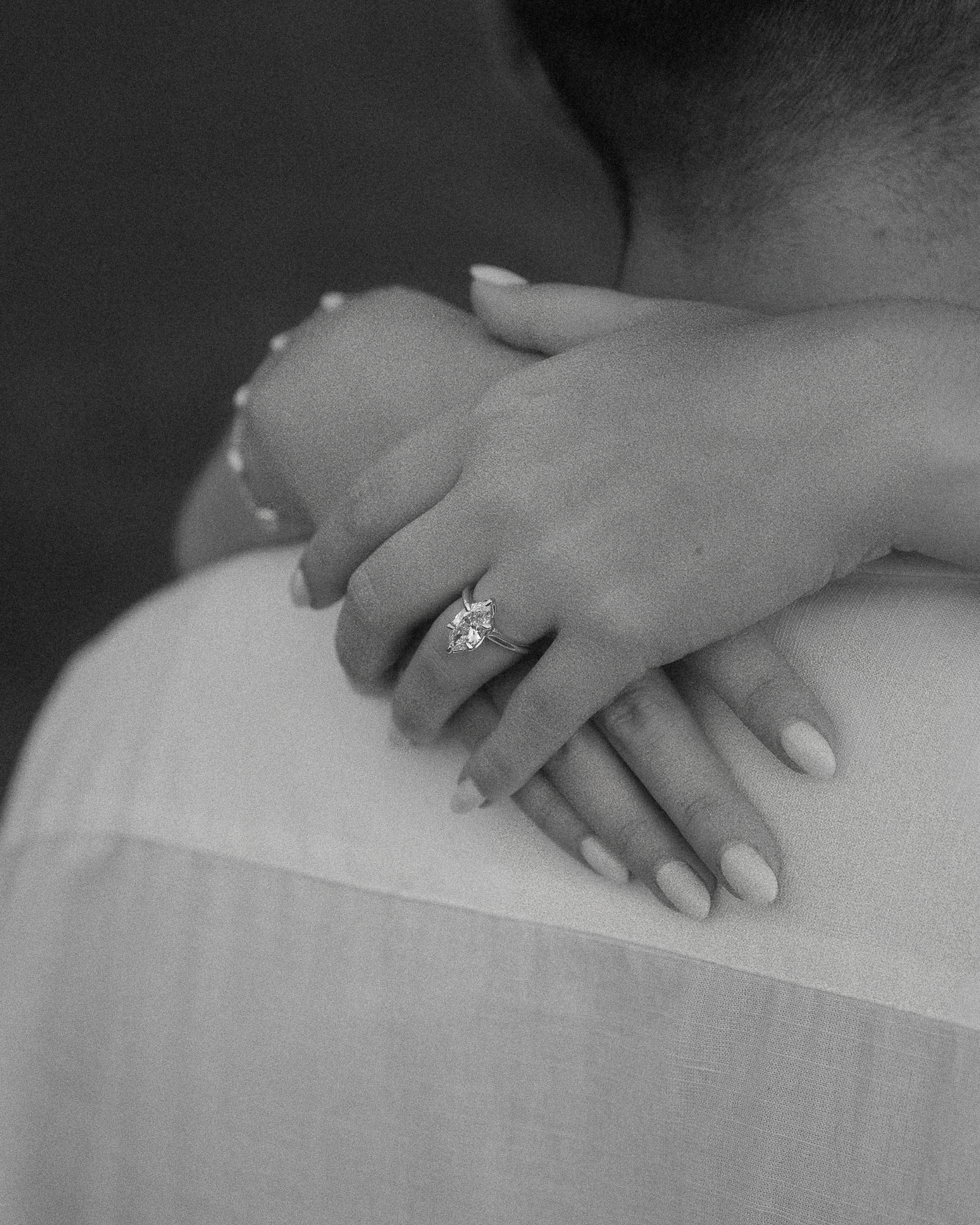
Wide apertures aren't just about creating beautiful bokeh. They're about making the most of available light and creating separation when the environment gets challenging.
Immersion: A Luxury Wedding Experience in Puerto Rico Designed Without Limits
Immersion is a luxury wedding experience in Puerto Rico designed for couples who want their entire celebration captured without limitation. From engagement sessions and rehearsal dinner coverage to full-day photography, cinematography, aerial coverage, and a custom wedding album, this is a seamless and elevated approach to destination weddings.
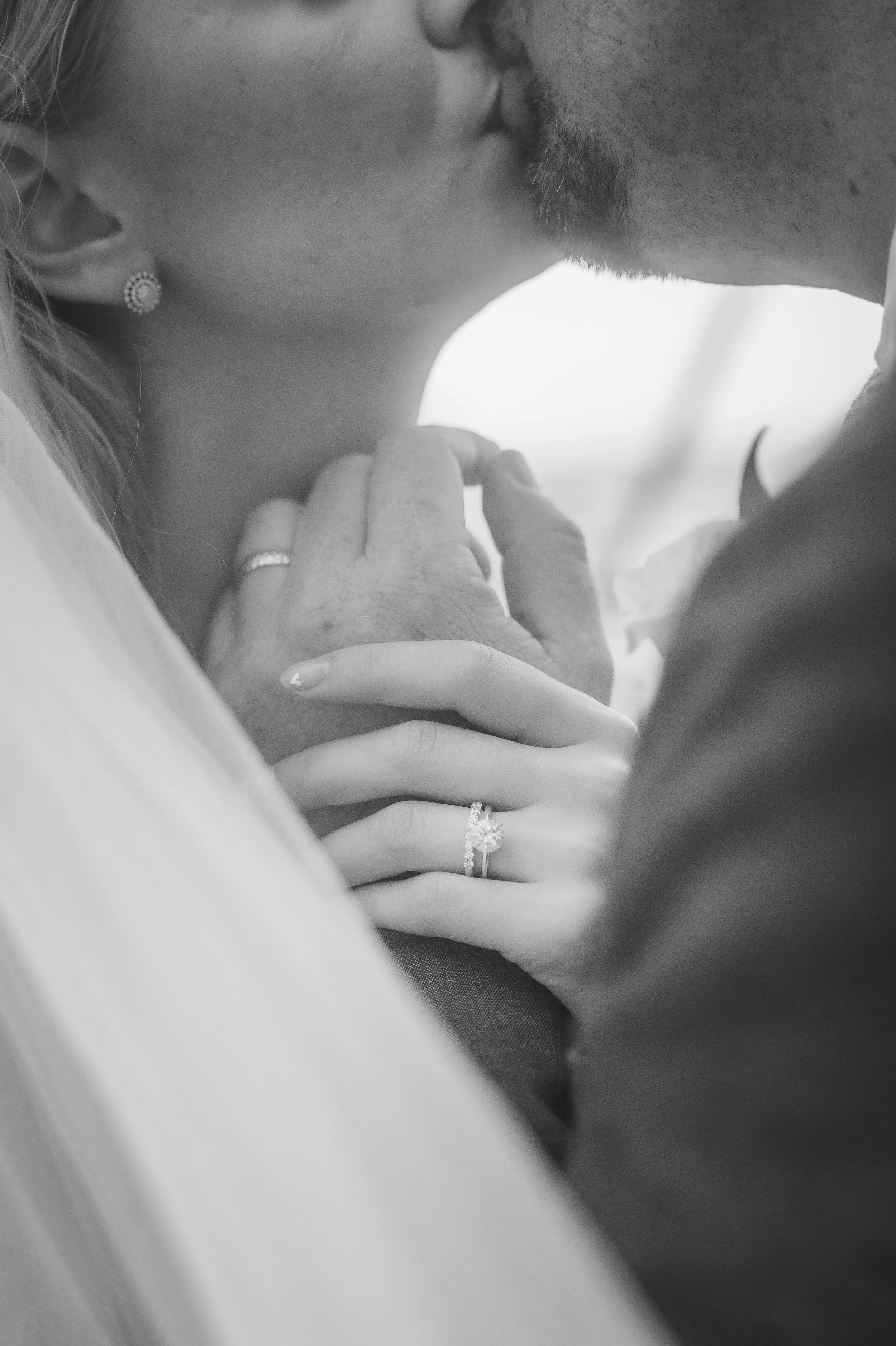
Immersion is the pinnacle of luxury weddings in Puerto Rico
There comes a point in the planning of a wedding when a distinction becomes unmistakably clear. Some celebrations are designed to be simple, contained, and efficient. Others, however, evolve into something far more expansive—multi-layered, emotionally rich, and deserving of a level of care that cannot be confined to a schedule or reduced to a series of isolated moments. It is within this second category that Immersion was conceived.
As a wedding photographer in Puerto Rico, I have had the privilege of documenting celebrations across every spectrum, from intimate elopements to large-scale destination weddings. What became increasingly evident over time is that traditional coverage models—however effective they may be—often fall short when tasked with preserving the full scope of a truly elevated wedding experience. The solution was not to adjust those models, but to redefine them entirely.
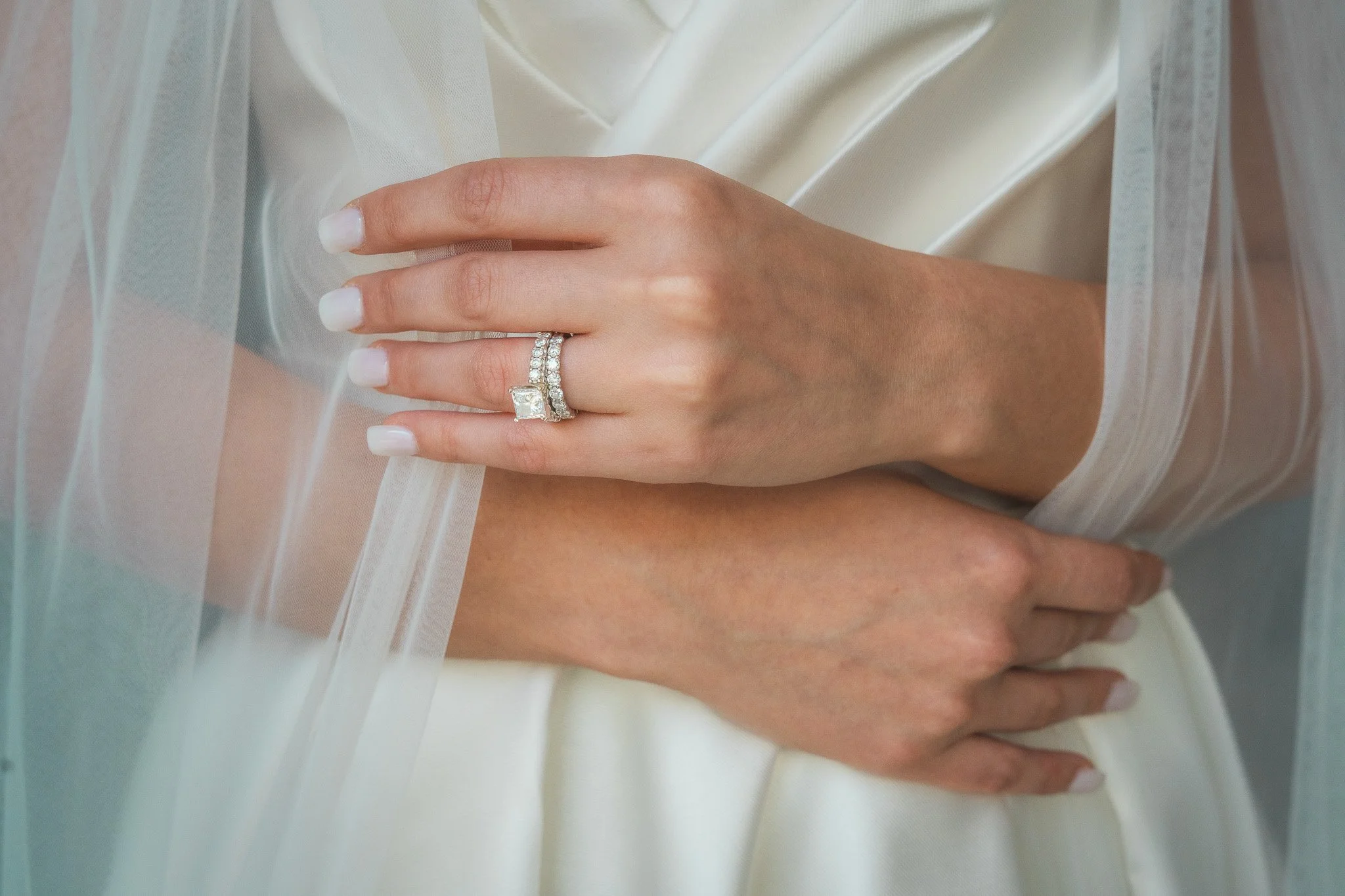
Immersion leaves no stone unturned.
Immersion is the result of that redefinition. It is a luxury wedding experience designed for couples who value presence, intention, and the ability to live their day fully, without compromise. It is not structured around hours, nor is it dictated by limitations. Instead, it is built around flow—capturing your wedding as it naturally unfolds, from its earliest moments to its final celebration, with a level of precision and cohesion that ensures nothing is overlooked.
At its core, Immersion unifies photography, cinematography, and aerial coverage under a single creative direction. This is a critical distinction. Rather than operating as separate entities, each visual element works in harmony, ensuring a seamless and cohesive final result. Every frame, every sequence, and every perspective contributes to a singular narrative—one that reflects not only how your wedding looked, but how it felt.
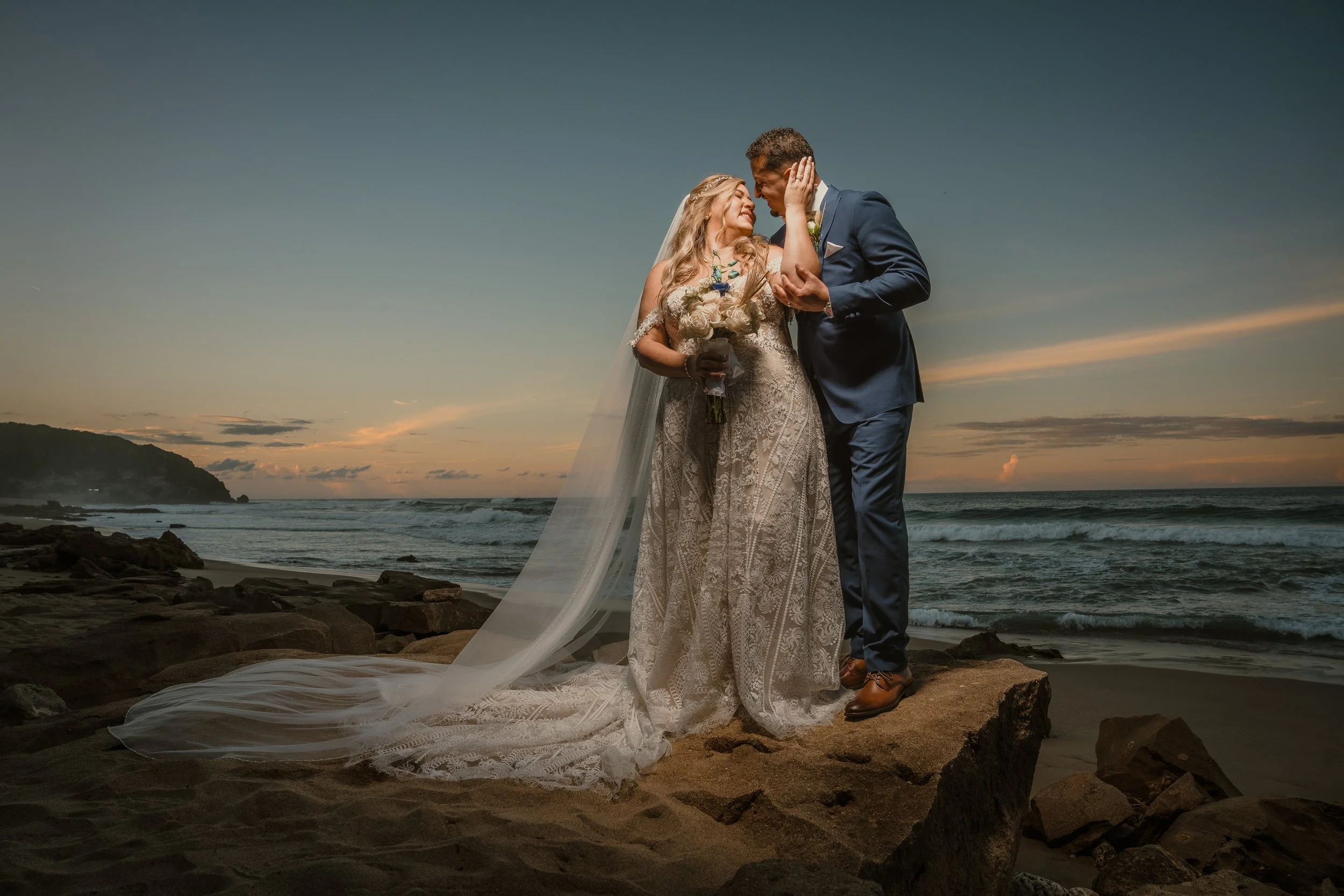
Immersion is for couples looking for the very best of destination weddings in Puerto Rico.
The experience begins well before the wedding day itself. A guided engagement session serves as both a creative foundation and a point of connection, allowing you to become comfortable in front of the camera while establishing a natural rhythm that carries into the wedding day. This is complemented by a private venue walkthrough, where visual considerations are refined and aligned in advance, ensuring that every environment is approached with intention.
For couples who wish to extend the narrative even further, rehearsal dinner coverage captures the anticipation and intimacy that precede the ceremony. These moments—often shared with a smaller, more personal circle—add depth and context to the overall story, transforming your wedding from a single-day event into a fully realized experience.
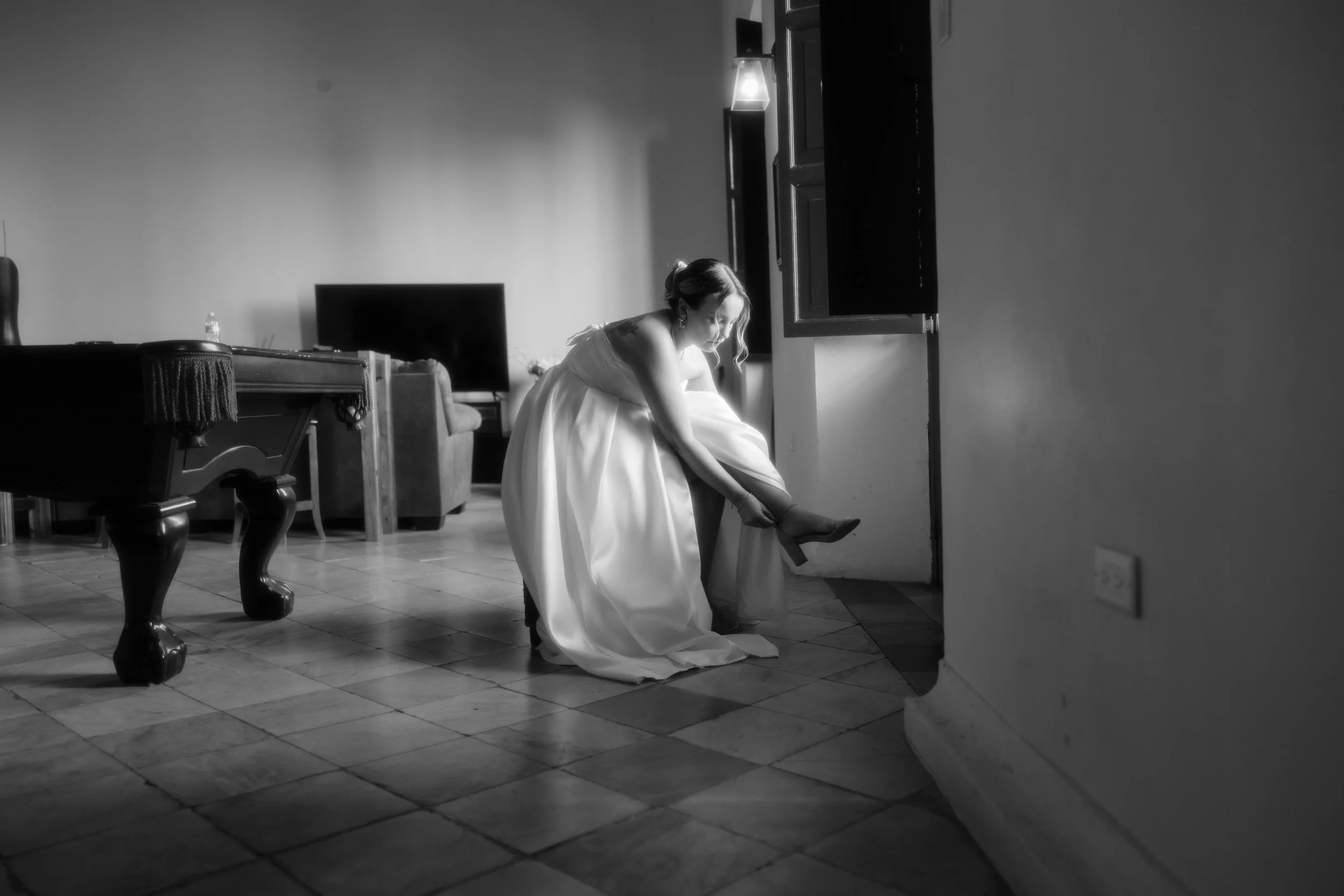
Immersion is a lavish experience without limits.
On the day of the wedding, Immersion removes the constraints that so often define traditional coverage. There is no pressure to adhere to rigid timelines, no need to prioritize one moment at the expense of another, and no fragmentation caused by competing creative directions. A dedicated team operates behind the scenes with precision and intention, allowing you to remain fully present throughout the day.
This presence is, in many ways, the greatest luxury of all. Without the burden of coordination or the awareness of time slipping away, you are free to experience your wedding exactly as it was meant to be lived. Every interaction, every transition, and every fleeting moment is captured with care, resulting in a body of work that feels both comprehensive and deeply personal.
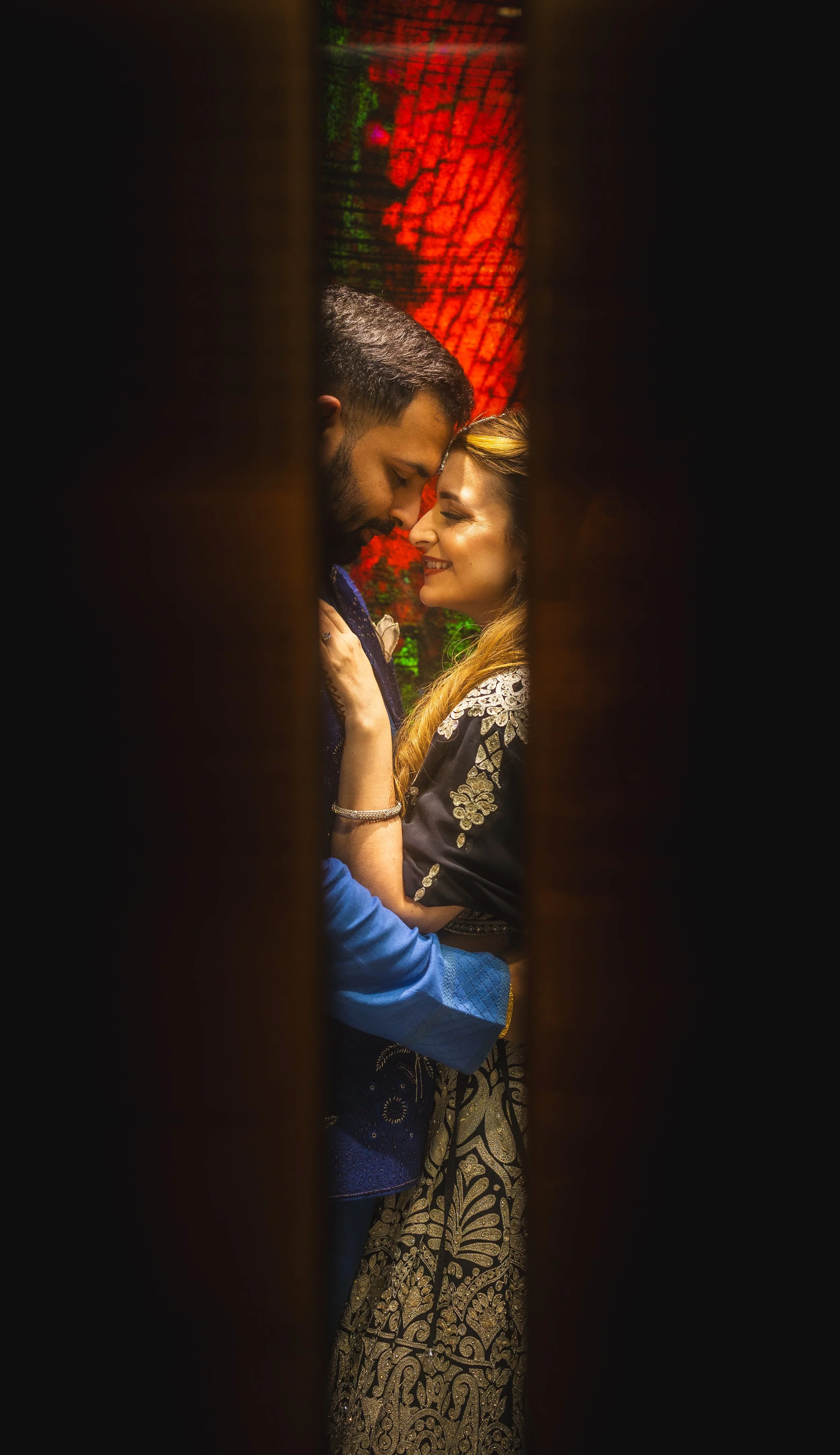
Immersion doesn’t leave anything to chance when it comes to destination weddings in Puerto Rico.
Following the wedding, the experience is preserved not only through digital galleries and cinematic films, but through a custom-designed luxury wedding album. Crafted with precision and curated with intention, this heirloom transforms your wedding into a tangible narrative—one that can be revisited, shared, and experienced for generations to come.
Immersion is not designed for every couple, nor is it intended to be. It is reserved for those who understand that some experiences cannot be approached halfway. For those who recognize that the way their wedding is documented is not a secondary consideration, but an integral part of the experience itself.
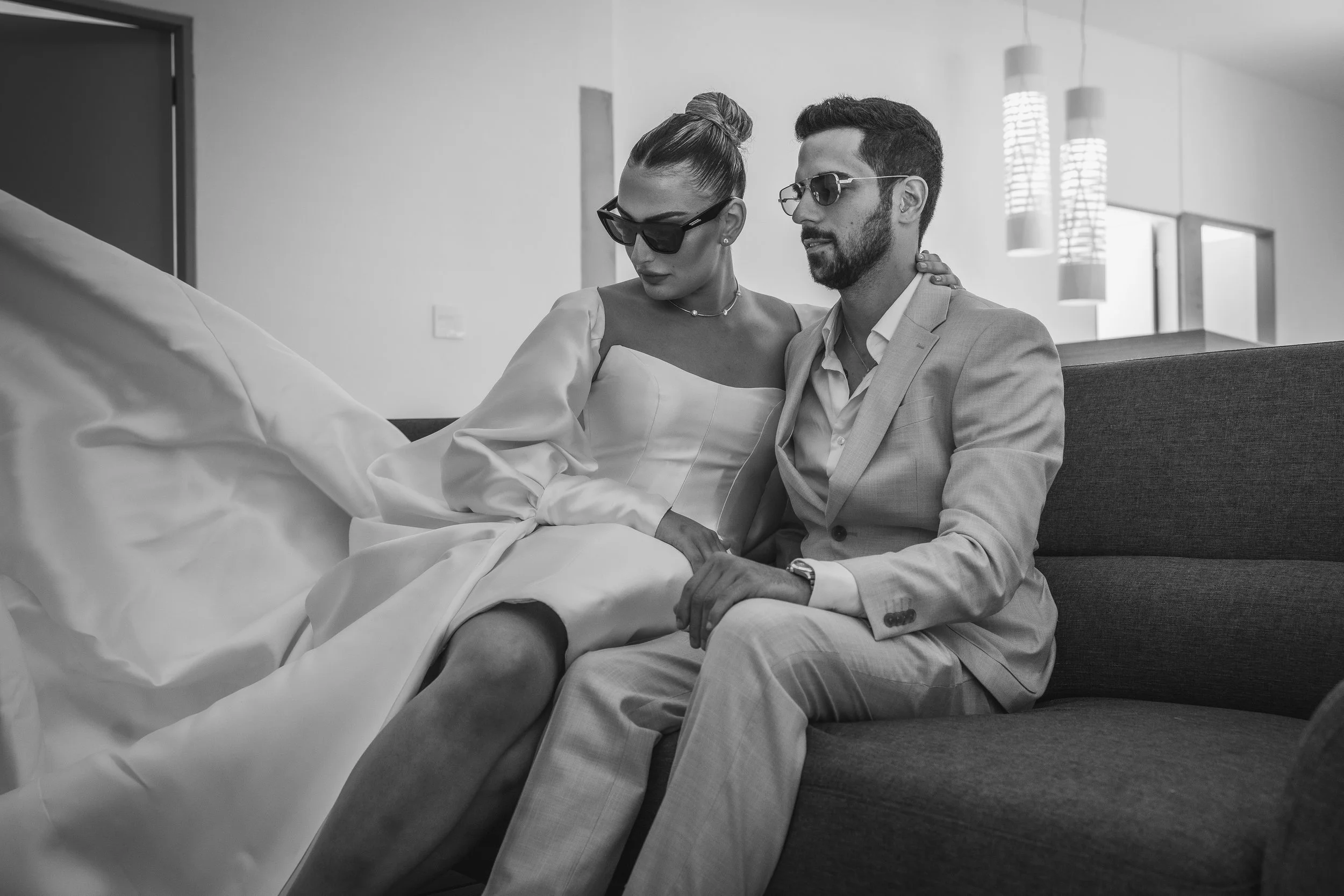
Immersion is the epitome of extravagance.
In a place as visually rich and culturally vibrant as Puerto Rico, the opportunity to create something truly exceptional is ever-present. Immersion ensures that this opportunity is fully realized—captured with intention, preserved with precision, and experienced without limitation.
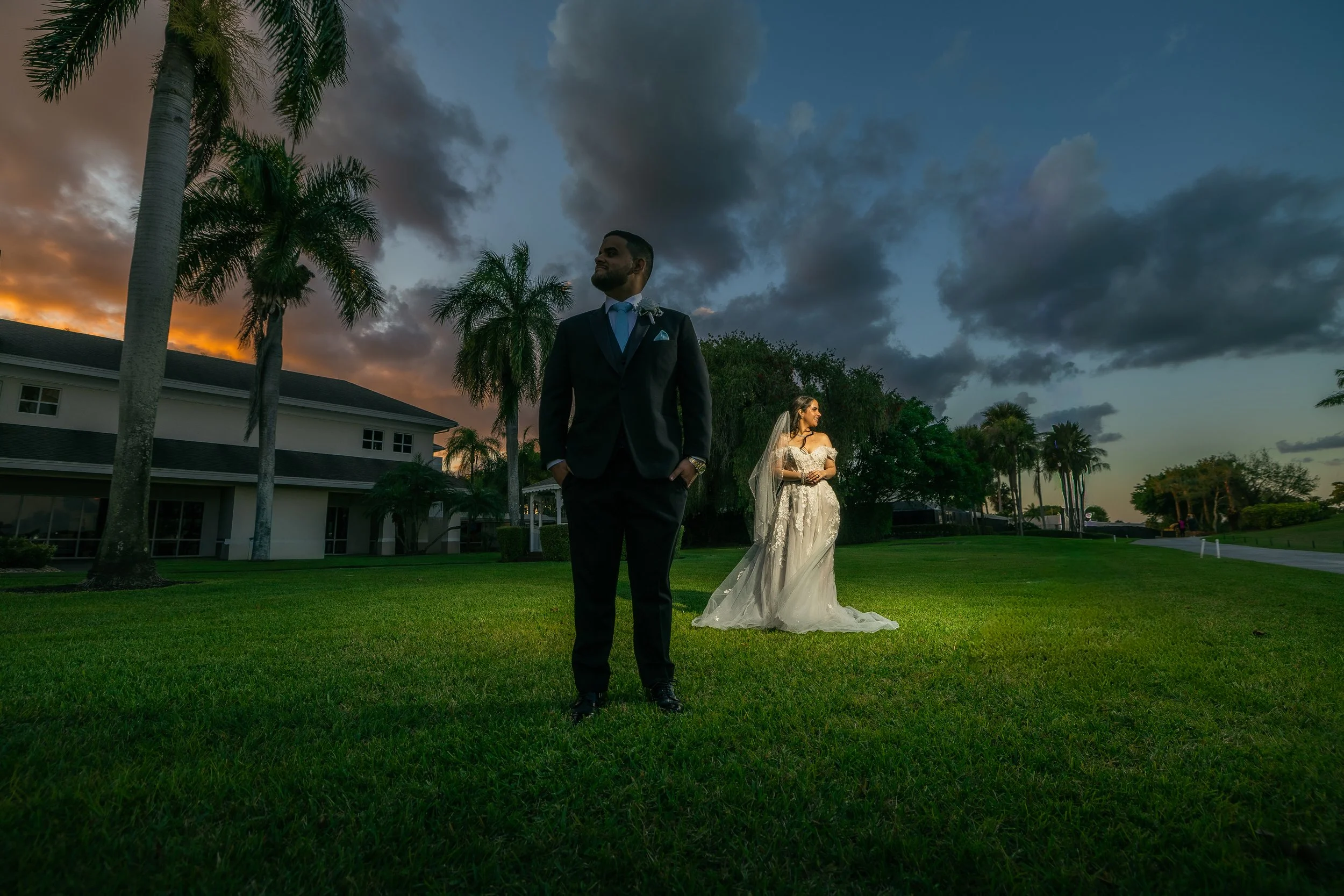
From Puerto Rico to Florida: A Destination Wedding at Indian Spring Country Club | Boynton Beach Wedding Photographer
What began as a proposal in Puerto Rico evolved into a destination wedding in Boynton Beach, Florida. Gabriela and José’s story is one of trust, connection, and intentional storytelling—marking my first wedding in Florida and the beginning of a new chapter.
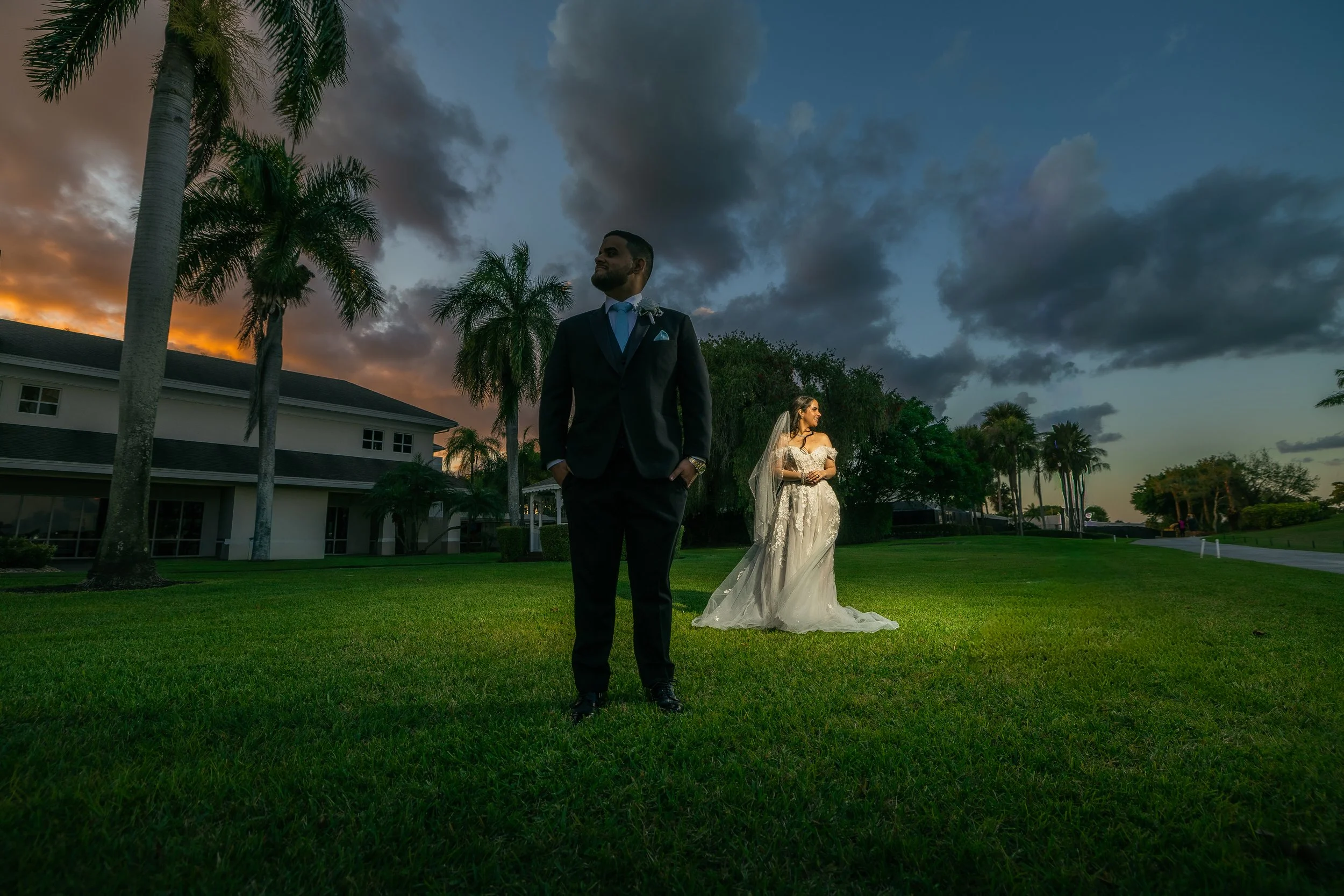
From Puerto Rico to Florida…some stories are meant to continue.
Some stories begin long before the wedding day.
Gabriela and José’s started in Dorado, Puerto Rico, where I had the honor of documenting their proposal. What stood out wasn’t just the moment itself, but how naturally everything flowed between us. There was an immediate sense of trust, an ease in communication, and a shared understanding of what mattered most: capturing their story in a way that felt honest and intentional.
When they received their images, the response was immediate. They didn’t just appreciate the photographs—they connected with them. And that connection carried forward.
When it came time to choose a wedding photographer, they kept me on a short list.
That alone meant something. But I wanted to meet them halfway.
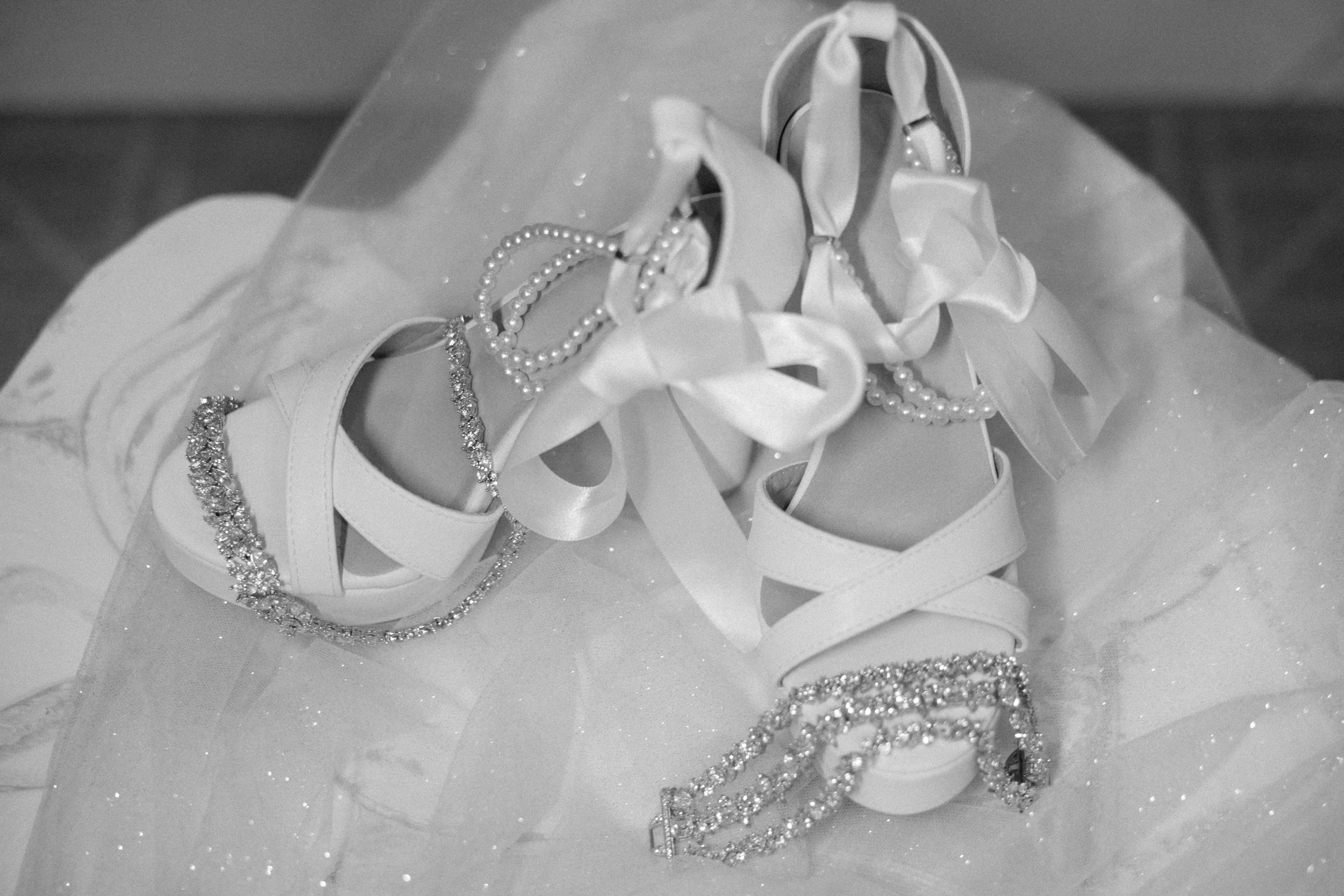
From Puerto Rico to Florida…some stories are meant to continue.
Given our history, I made a decision that would ultimately shape the trajectory of this story. I waived the travel fees. Not as a discount, but as a gesture—an acknowledgment of the trust they had already placed in me and an investment in what I knew this opportunity could become.
They didn’t hesitate.
From that moment on, this was no longer just another wedding. It was my first true destination wedding—one that required travel, coordination across states, and a level of preparation that pushed me into new territory.
And I welcomed it fully.
Because the vision was clear: if I was going to enter the Florida market, I needed to do it with intention.
As the wedding approached, communication became everything.
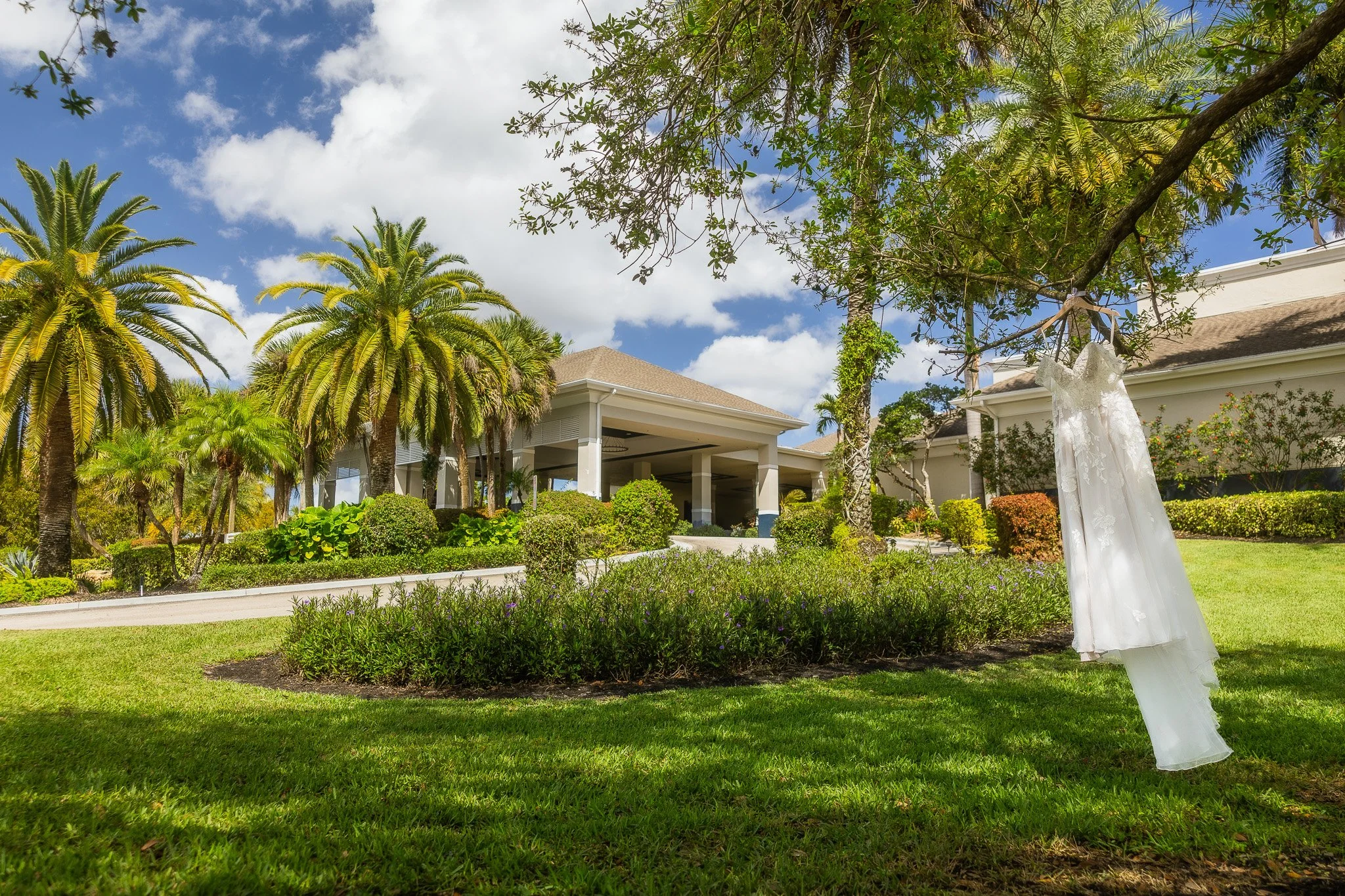
Trust took me across borders for this one.
We scheduled a call while I was leaving another wedding in Puerto Rico, going over timelines, expectations, and priorities. Gabriela and José walked me through their day in detail, even sending over a video of the venue so I could begin visualizing compositions before ever stepping foot on the property.
Indian Spring Country Club presented itself exactly as you would hope for a Florida wedding venue. Expansive, refined, and surrounded by the kind of natural light photographers chase. Palm trees, open skies, and an atmosphere that felt both elegant and relaxed at the same time.
It was the kind of setting that rewards preparation.
To execute at the level I expect from myself, I built a team.
Erwin joined me to handle video, bringing a cinematic layer to the story. Anthony, a photographer based in Orlando, came on board to ensure we had both coverage and local familiarity. Together, we created a system that allowed us to move efficiently without sacrificing intention.
Because destination work isn’t just about showing up. It’s about building something that works seamlessly in an unfamiliar environment.
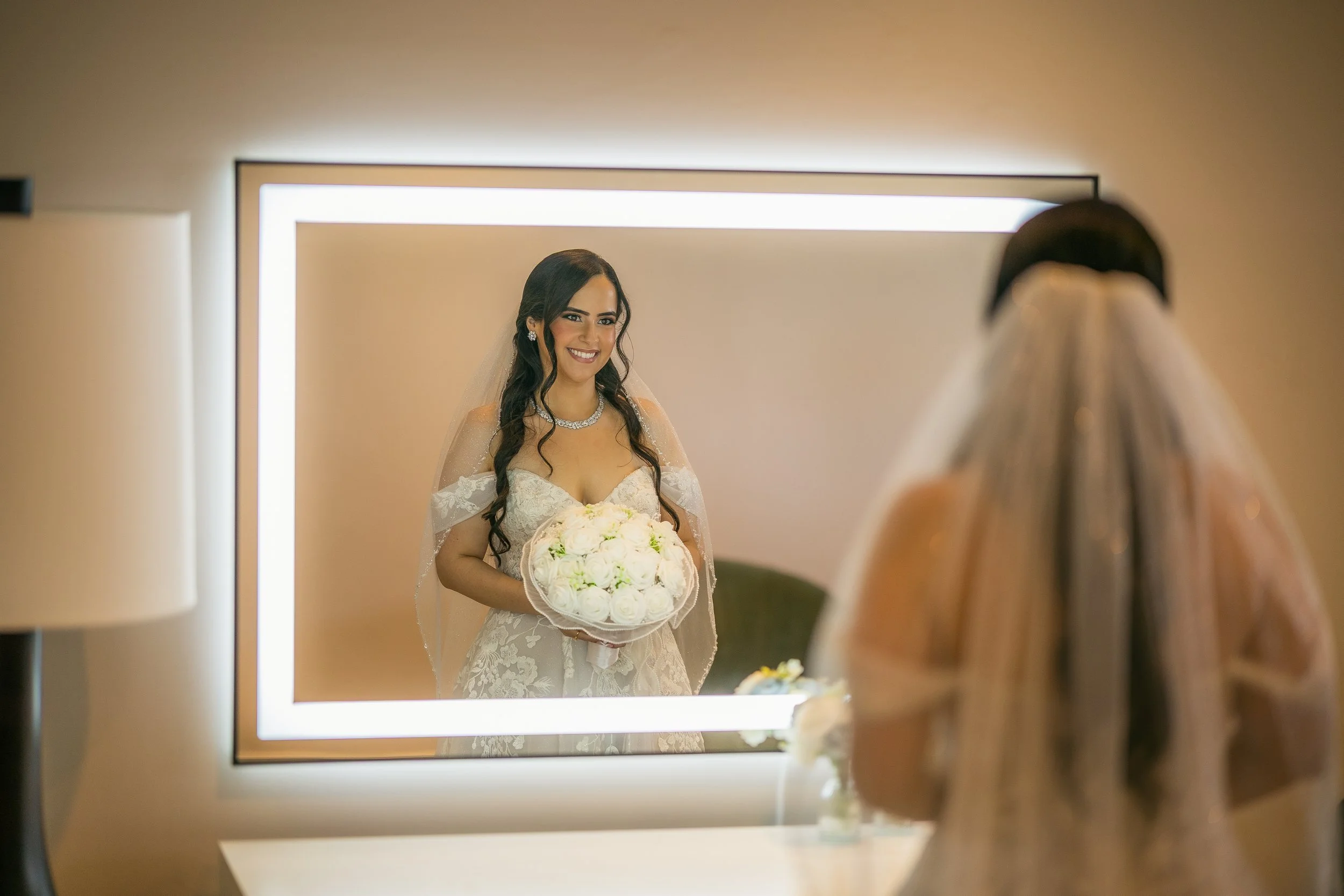
My first true destination wedding…built on connection.
We arrived in Florida the day before.
After landing, we made a quick stop for last-minute gear needs and checked into what can only be described as a lesson in managing expectations. The motel looked nothing like its photos. The walls were worn, the space felt neglected, and under any other circumstance, it would have been a problem.
But it wasn’t.
Because clarity has a way of overriding discomfort. I knew what the next day represented, and that focus made everything else irrelevant.
Ironically, I slept incredibly well.
The morning of the wedding began early.
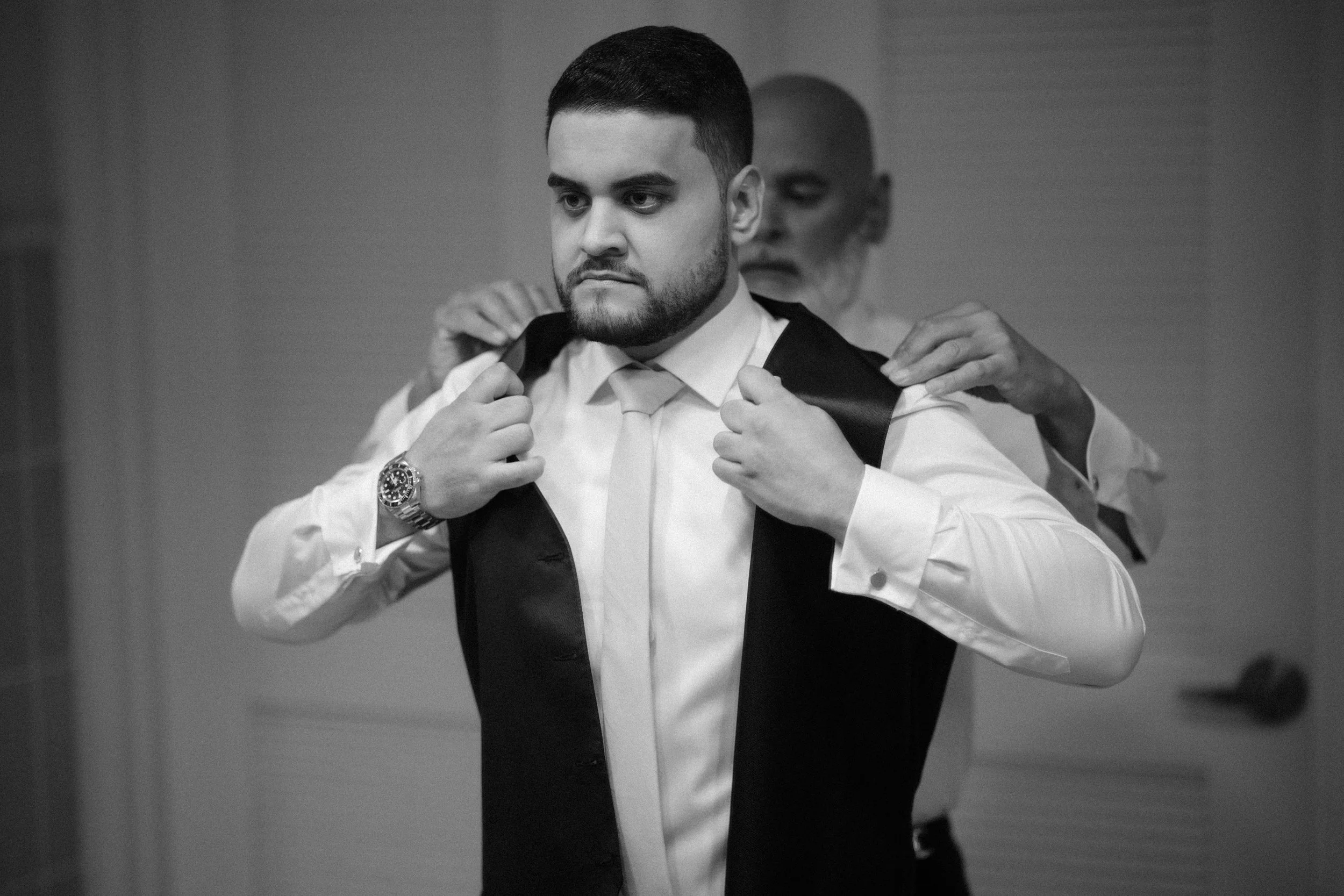
Late to the party…but always fashionably.
Erwin and I got ready, checked our gear, and coordinated with Anthony, who was already making his way from Orlando. By the time we arrived at Indian Spring Country Club, he was there waiting.
And just like that, we were in motion.
From the moment we stepped inside, the energy was unmistakable. Laughter carried through the hallways. Anticipation filled the air. Gabriela was surrounded by her bridesmaids, each dressed in vibrant tones that added depth and character to every frame.
We moved quickly through the details—capturing the dress, the accessories, the environment—before transitioning into the moments that matter most.
One of those moments came when her father saw her for the first time.
There’s a stillness in those interactions that can’t be manufactured. It’s quiet, emotional, and deeply human. The kind of moment that reminds you why this work matters.
At the same time, José was nowhere to be found.
As it turned out, he had misplaced his wedding shoes. And in a twist that felt almost scripted, they were sitting in Gabriela’s closet the entire time.
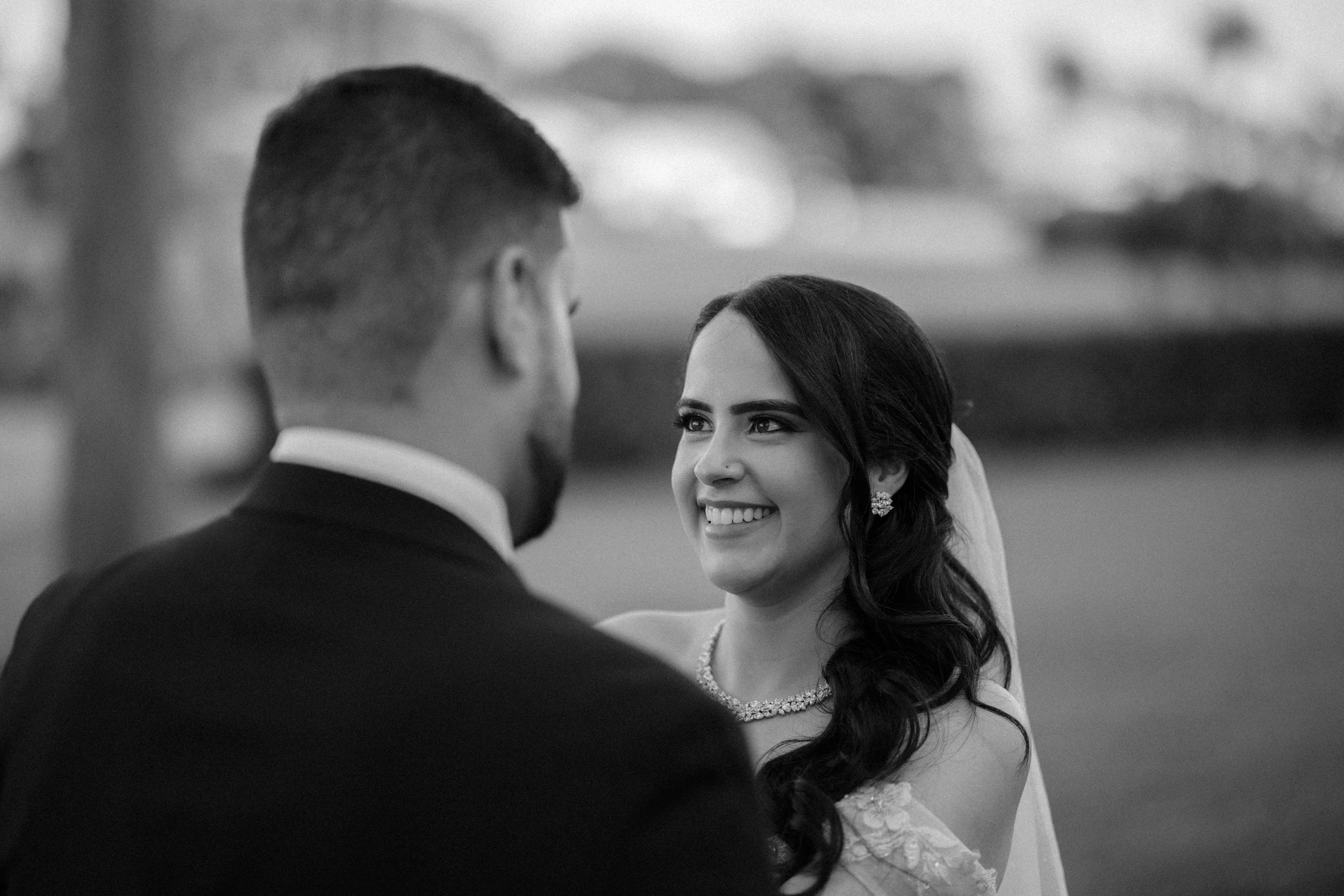
From proposal to “I do.”
With the timeline tightening, we adapted.
A women’s restroom became the groom’s prep space. It wasn’t ideal, but it didn’t need to be. What mattered was creating the space for him to step into the day fully—and documenting it in a way that felt seamless despite the circumstances.
This is the reality of wedding photography. Not everything goes according to plan.
But the experience shouldn’t feel that way.
The ceremony unfolded exactly as envisioned.
Set against a gazebo adorned with white and blue florals, it carried a sense of simplicity and elegance that felt distinctly Floridian. White chairs lined the aisle. The sky opened up above them. And as Gabriela walked forward, everything seemed to settle into place.
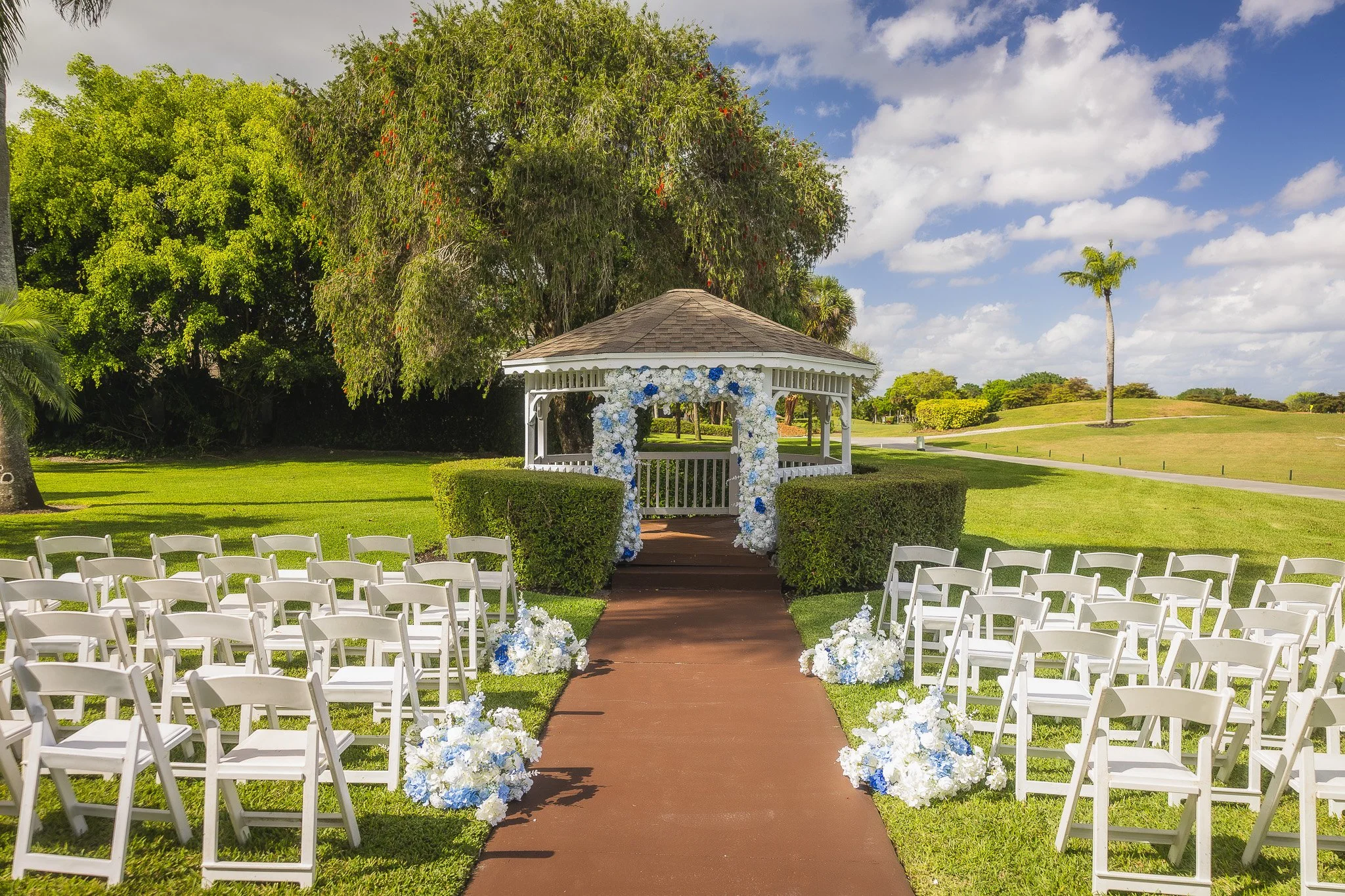
The kind of trust every photographer hopes to earn.
José’s brother, Victor, officiated the ceremony with a confidence that felt both natural and heartfelt. There was sincerity in his words, a rhythm to the way he spoke, and a presence that grounded the entire moment.
It didn’t feel performative.
It felt real.
Following the ceremony, we transitioned into family portraits—structured, efficient, and guided by intention. Anthony took the lead here, calling out names and keeping the flow intact while I focused on maintaining consistency in composition and light.
Once we wrapped, I cleared the space.
This is one of the most important decisions a photographer can make during a wedding day: creating uninterrupted time for the couple.
Because that’s where the best work happens.
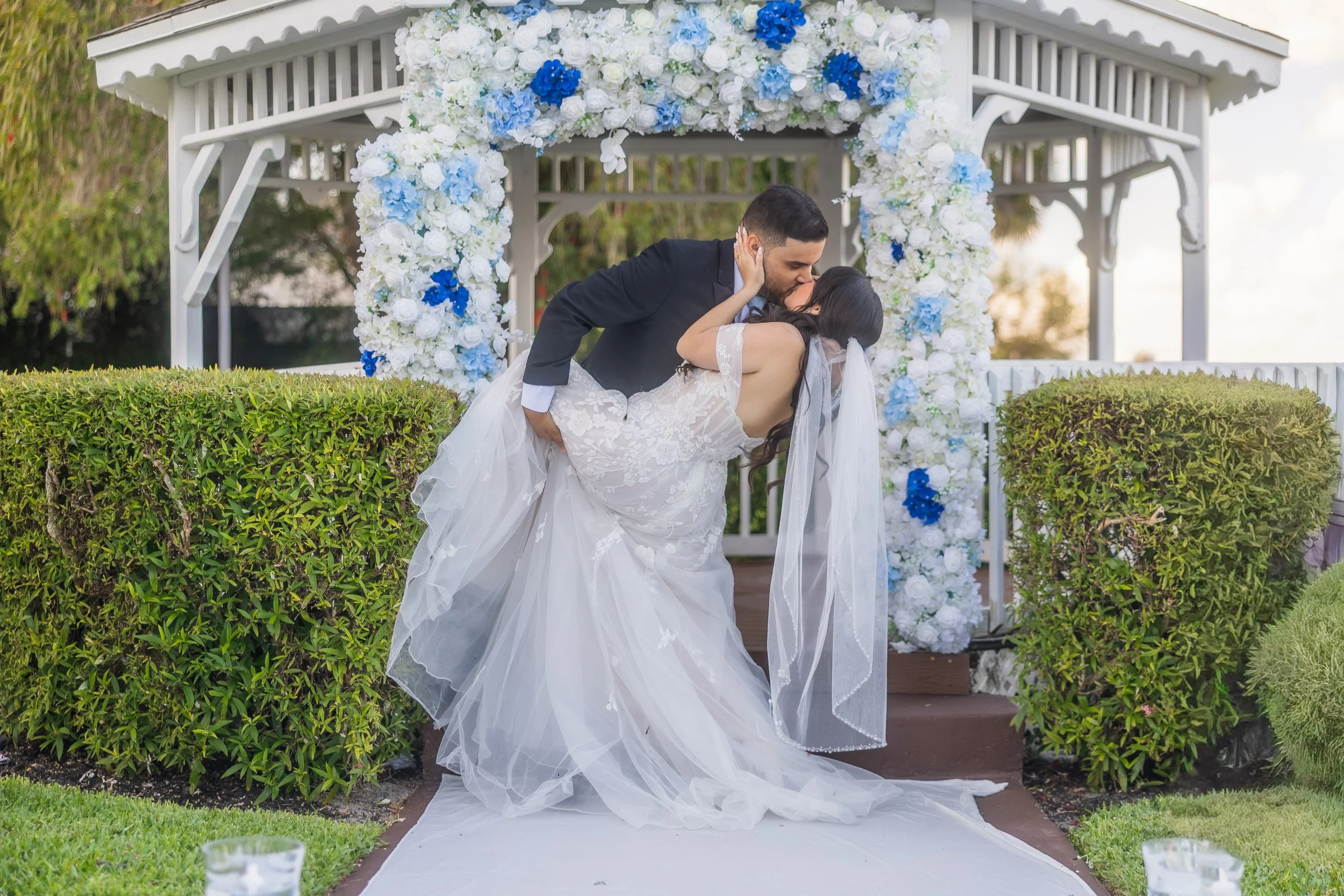
We adapt. We create. We deliver.
With no distractions, Gabriela and José were able to settle into each other. We started with environmental portraits, using the architecture and landscape to frame them naturally. Then, as the sun began to dip, everything shifted.
The light softened.
The mood deepened.
And we transitioned into flash.
That contrast—between natural light and controlled lighting—is where storytelling evolves from documentation into something more cinematic. It’s a shift that adds dimension, intention, and visual identity to the final gallery.
The reception carried that energy forward.
The room filled with movement, sound, and celebration. The couple’s entrance set the tone, followed by their first dance and the moments shared with their parents—each one layered with emotion and meaning.
Toasts followed.
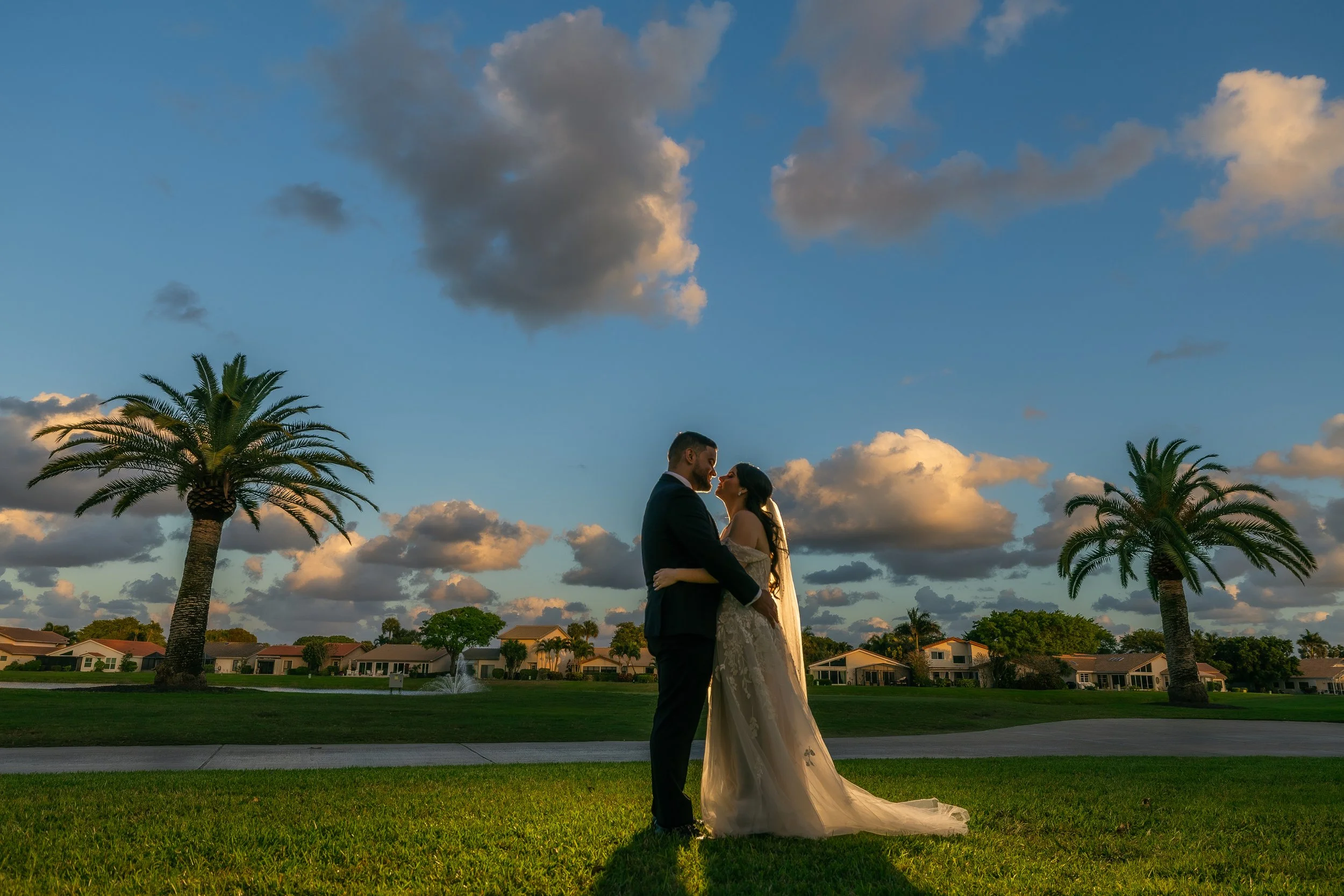
Golden hour in Florida never misses.
And as both fathers spoke, there was a quiet understanding in the room of how much this day meant—not just to Gabriela and José, but to the people who raised them.
Those are the moments that linger.
Then the atmosphere changed.
The bouquet toss brought humor. The garter moment brought laughter. And just when it felt like the night might begin to wind down, everything shifted again.
La Hora Loca.
What followed was a complete transformation of the space. Performers filled the dance floor, music intensified, and the entire room became part of the experience. Guests who had been seated moments before were suddenly in motion, pulled into something that felt more like a celebration than a tradition.
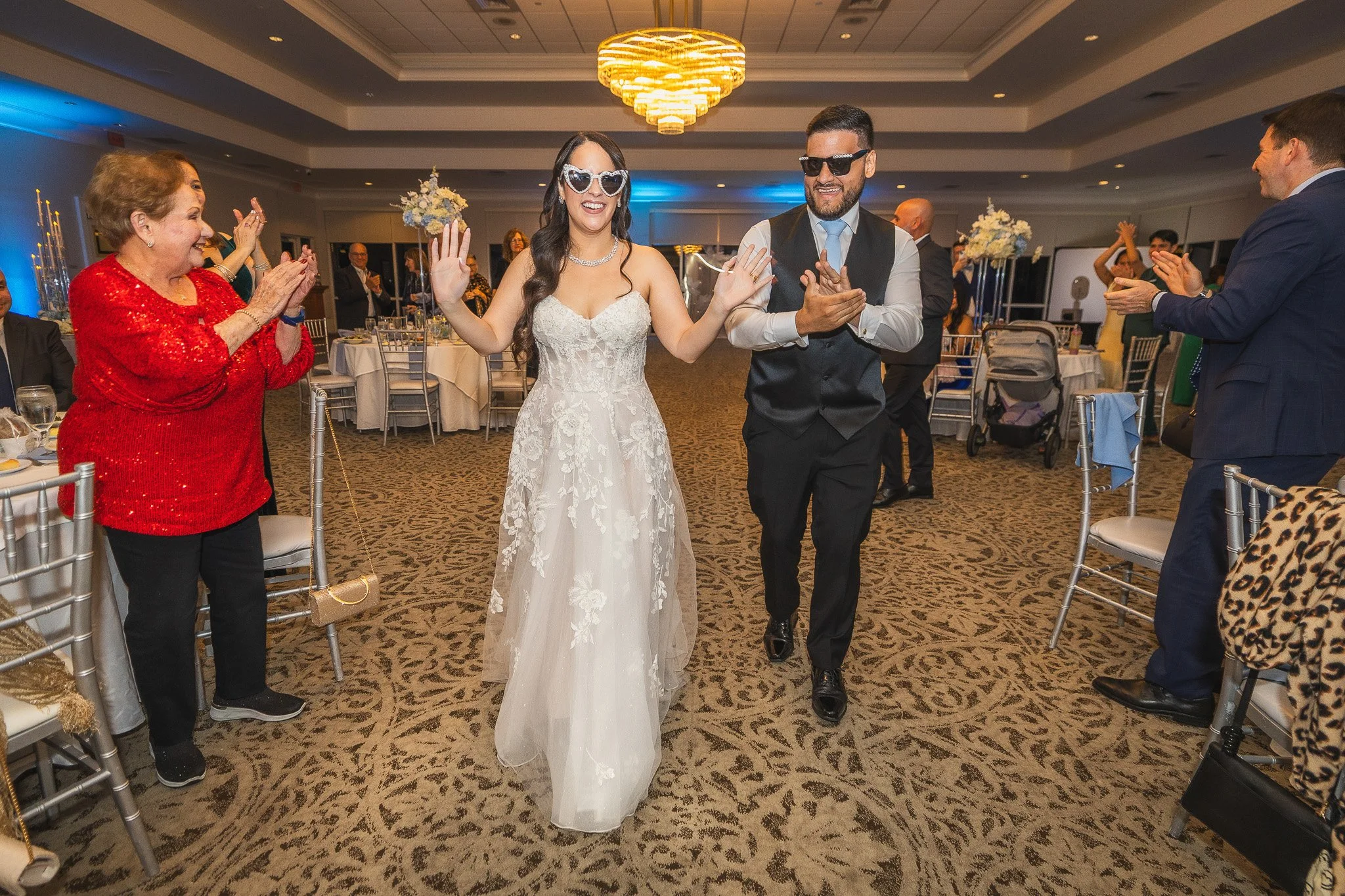
La Hora Loca changed everything.
It was vibrant. Unpredictable. Alive.
And it closed the night exactly the way it deserved to be remembered.
When it was all over, the exhaustion set in.
The kind that only comes after giving everything you have to a day that matters.
We said our goodbyes, packed our gear, and left the venue knowing we had done exactly what we came to do.
Erwin and I checked into a different hotel that night—one that felt like a reset. Clean, quiet, and exactly what we needed. By the next morning, I was already backing up files, beginning the process of preserving everything we had captured.
Because the work doesn’t end when the wedding does.
It evolves.
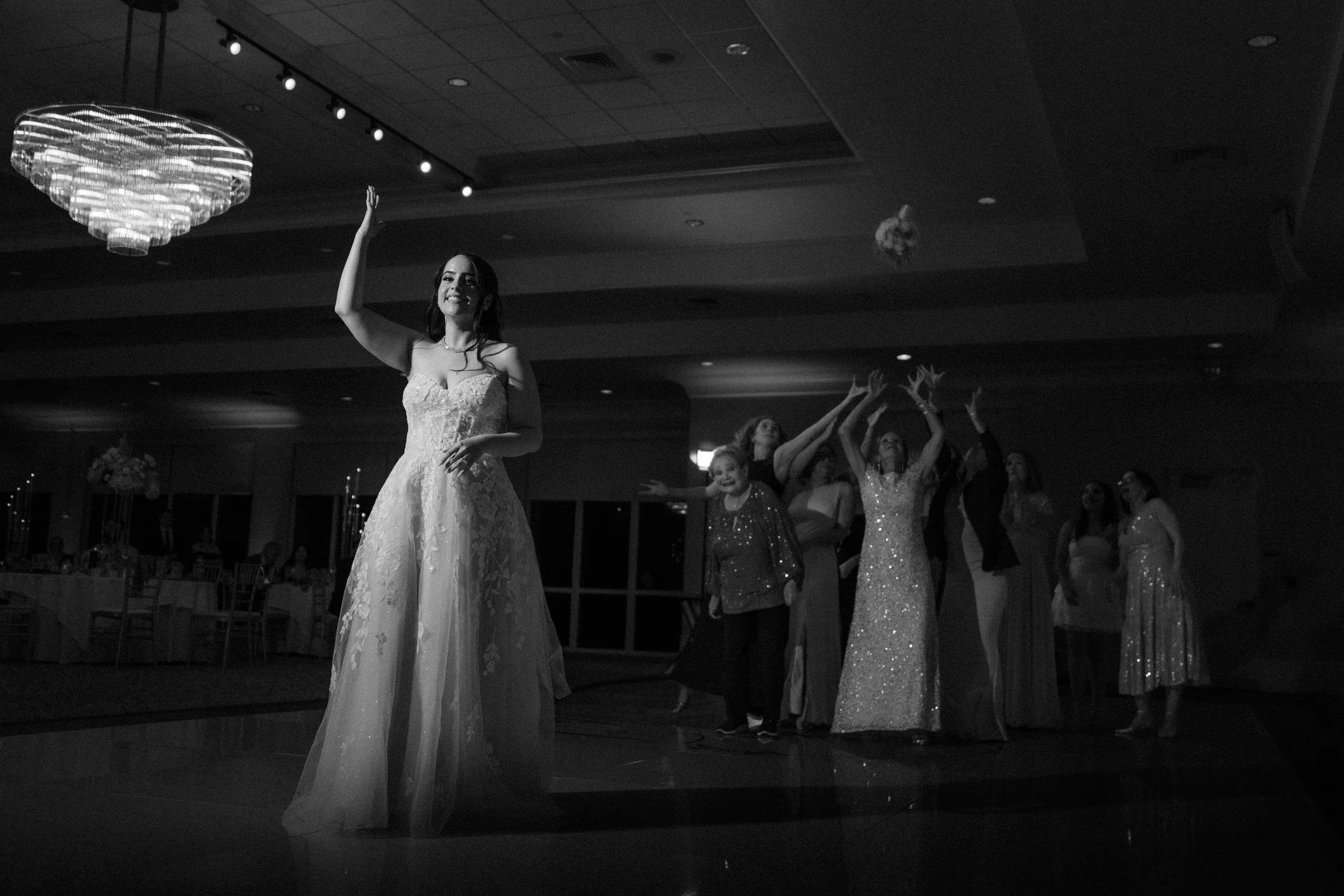
This is what intention looks like.
This wedding marked more than just a milestone.
It marked an expansion.
Florida represents a natural extension of the kind of work I want to create—elevated, intentional, and rooted in real connection. With its diversity of venues, consistent light, and accessibility for destination couples, it offers an environment where storytelling thrives.
And for couples who value that level of intention, the experience becomes something more than just photography.
It becomes part of the story itself.
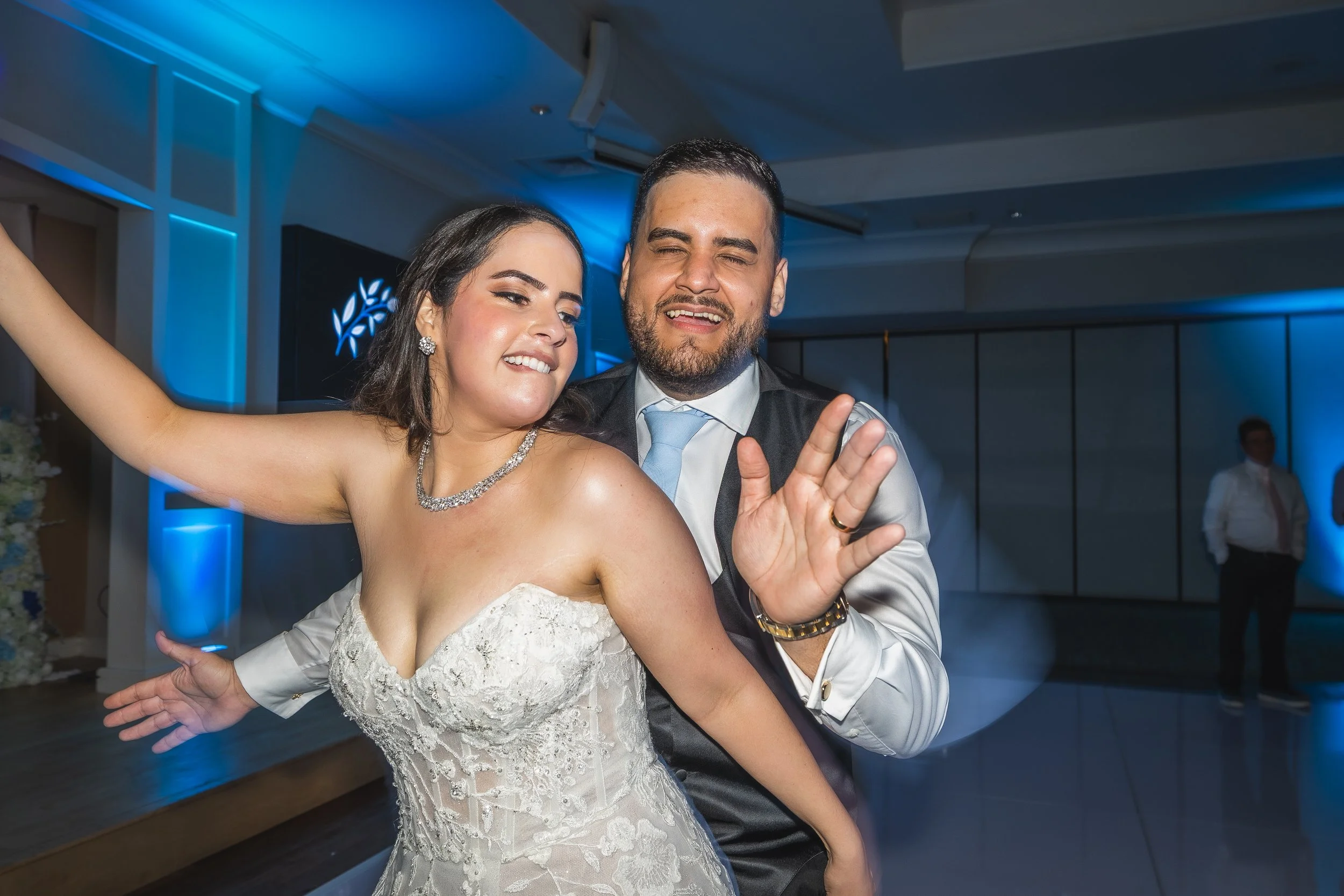
These two were having the time of their lives.