
Why I Shoot Prime Lenses for Puerto Rico Elopements and Weddings
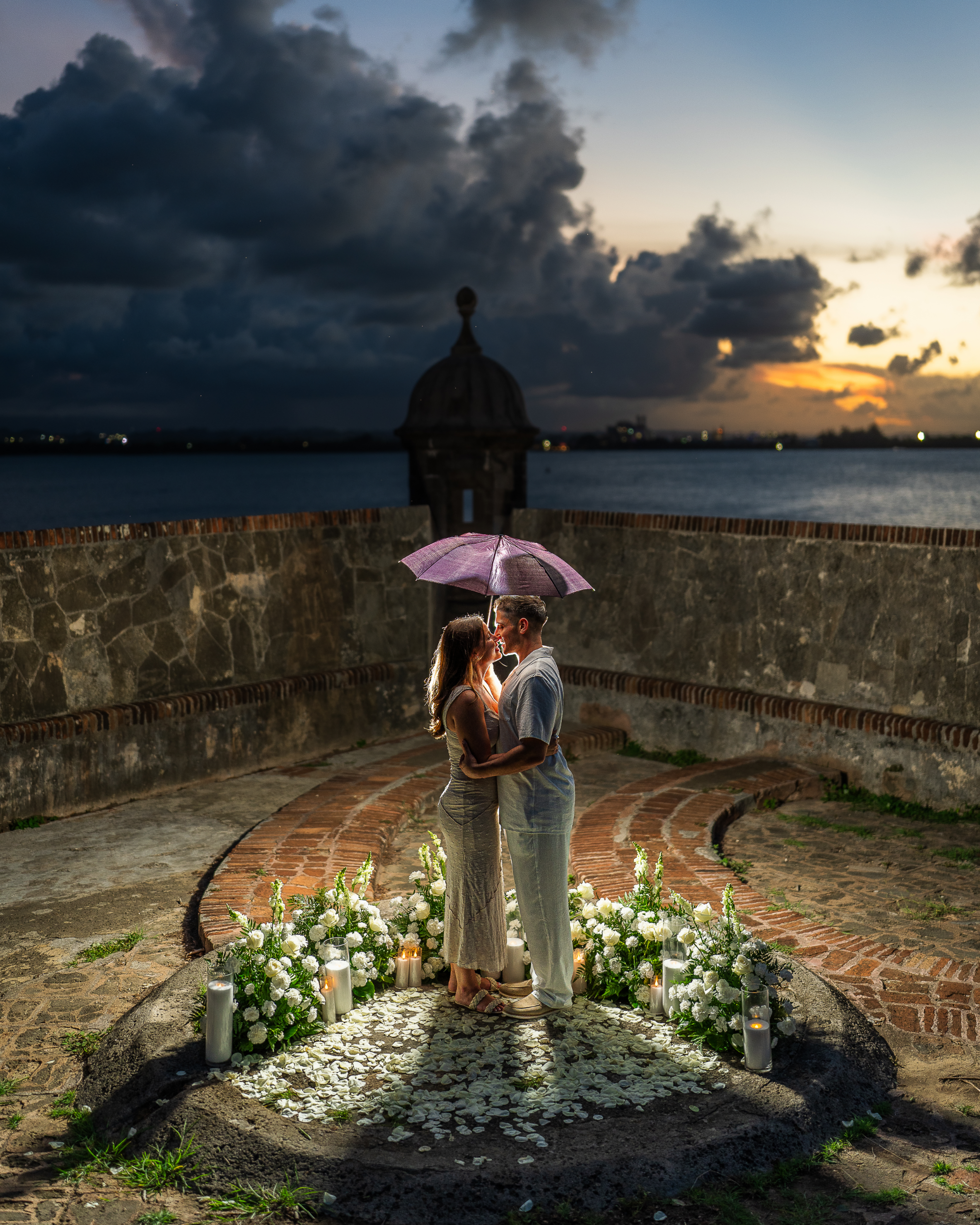
Sometimes the best composition isn't found by turning a zoom ring. It's found by taking a few steps in the right direction.
As a wedding photographer, I've switched from shooting with zoom lenses to only primes.
This came to be because of a conversation I had with a fellow wedding photographer.
We were one day talking about gear, specifically as it pertains to lenses. I asked him which zoom lens he currently had in his kit and he said:
"Not one."
Baffled, I asked him, "Why?"
He immediately said:
"Zooms make me lazy and primes incentivize creativity."
He has been living in my head rent-free ever since.
The more I thought about it, the more it made sense.
As a result, since switching to Sony Alpha, I've had access to a lot more lenses, namely those from Sigma. Moreover, I've bought three primes: the 20mm f/1.4, the 35mm f/1.2, and the 85mm f/1.4.
Granted, I still own a 28-105mm f/2.8, which is fantastic, but I find myself reaching for primes 99.9% of the time.
And the more I shoot with them, the more I understand why.
Prime Lenses vs. Zoom Lenses for Wedding Photography
Before I go any further, I want to make something very clear: I don't think zoom lenses are bad.
Quite the opposite.
Modern professional zoom lenses are phenomenal pieces of optical engineering. A good 24-70mm, 24-105mm, or 28-105mm can produce incredible images while giving a photographer an enormous amount of flexibility.
For wedding photography, that versatility can be incredibly valuable.
Wedding days move quickly. A ceremony can go from a wide composition showing the entire setting to an emotional close-up within seconds. During a reception, you might be photographing a couple dancing one moment and then need to capture a guest's reaction from across the room the next.
A zoom lens allows you to change your framing without changing your position.
That's a huge advantage.
Prime lenses, however, force you to approach photography differently.
Instead of changing your focal length, you change your position.
Instead of zooming in, you walk closer.
Instead of zooming out, you step backward.
And that seemingly small difference can fundamentally change the way you photograph a wedding or elopement.
The Biggest Advantage of Zoom Lenses: Versatility
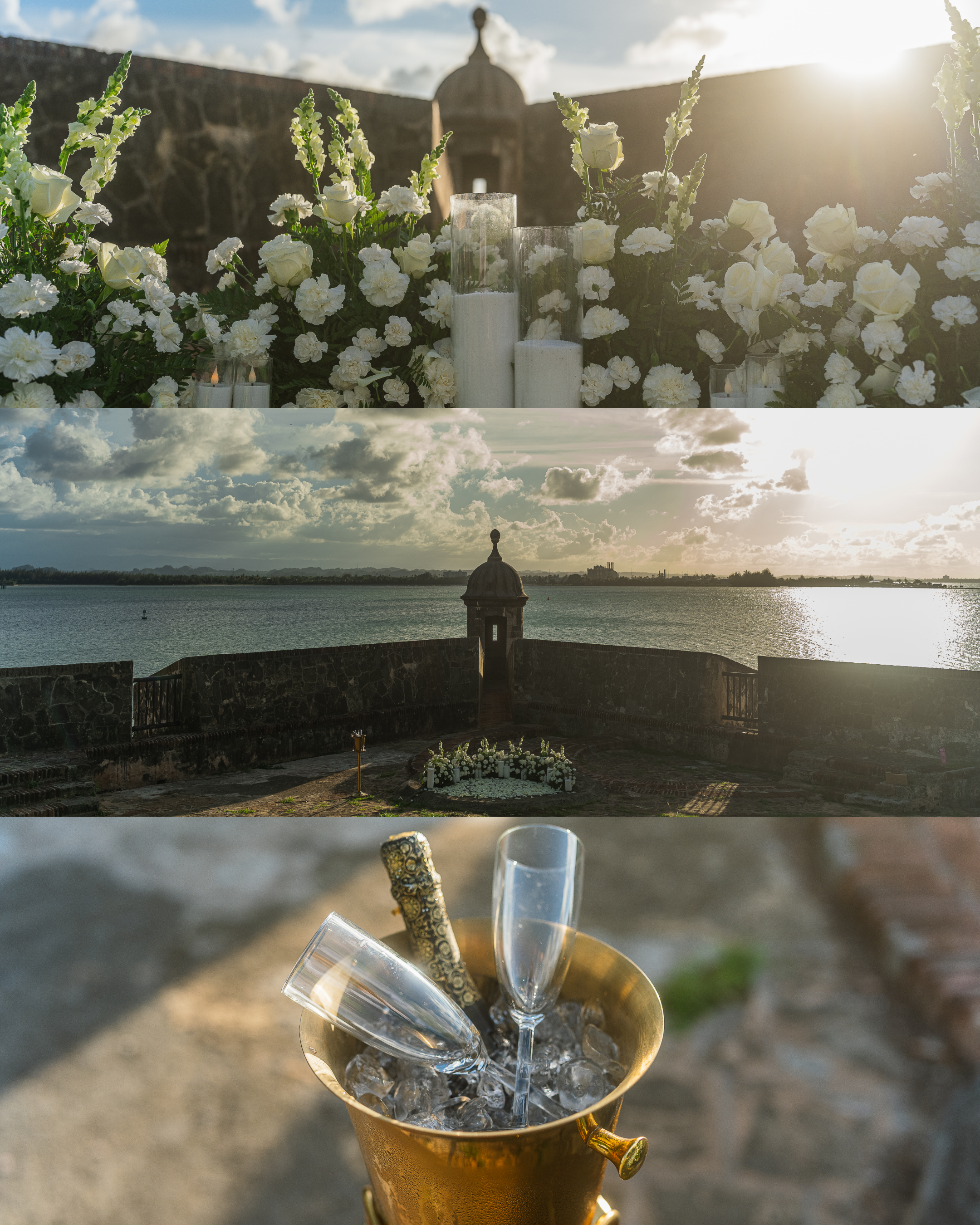
Shooting with a 35mm prime forces me to get closer, interact more, and become part of the moment rather than simply documenting it from a distance.
The biggest advantage of a zoom lens is obvious: versatility.
A single zoom can cover several different photographic perspectives. At a wider focal length, you can photograph a couple within a dramatic landscape. At a more moderate focal length, you can create a natural perspective. At the longer end, you can create a tighter portrait and isolate your subjects.
You don't need to change lenses.
You don't necessarily need to move.
And you don't have to worry about potentially missing a moment while switching lenses.
For a wedding photographer working under extremely fast-paced conditions, that can be incredibly useful.
Zoom lenses can also reduce the amount of gear you need to carry. Instead of bringing several primes, a photographer can potentially cover an enormous range of focal lengths with two or three zoom lenses.
There is also something to be said for efficiency.
When you're photographing a wedding with hundreds of guests, multiple locations, changing lighting conditions, and a timeline that can change at any moment, the ability to react quickly matters.
This is where zoom lenses excel.
But Zooms Can Also Make You Lazy
And this brings me back to that conversation.
"Zooms make me lazy and primes incentivize creativity."
The more I photograph with primes, the more I understand what my friend meant.
When you have a zoom lens mounted on your camera, it's incredibly easy to stand in one place and simply change your focal length.
Too wide?
Zoom in.
Too tight?
Zoom out.
Need a different composition?
Turn the zoom ring.
There's absolutely nothing wrong with doing this. It's part of why zoom lenses exist.
But when I started shooting with primes, I realized how often I had been allowing the lens to make compositional decisions for me.
A prime doesn't give you that option.
If I'm shooting with my 85mm and want a wider composition, I can't simply twist a ring.
I have to move.
If I'm shooting with my 20mm and want the couple to occupy more of the frame, I have to physically get closer.
That forces me to think about perspective, distance, composition, foreground, background, and the relationship between my subjects and their environment.
And that, to me, is where primes become much more than just lenses.
They become creative tools.
Aperture Matters More Than You Think
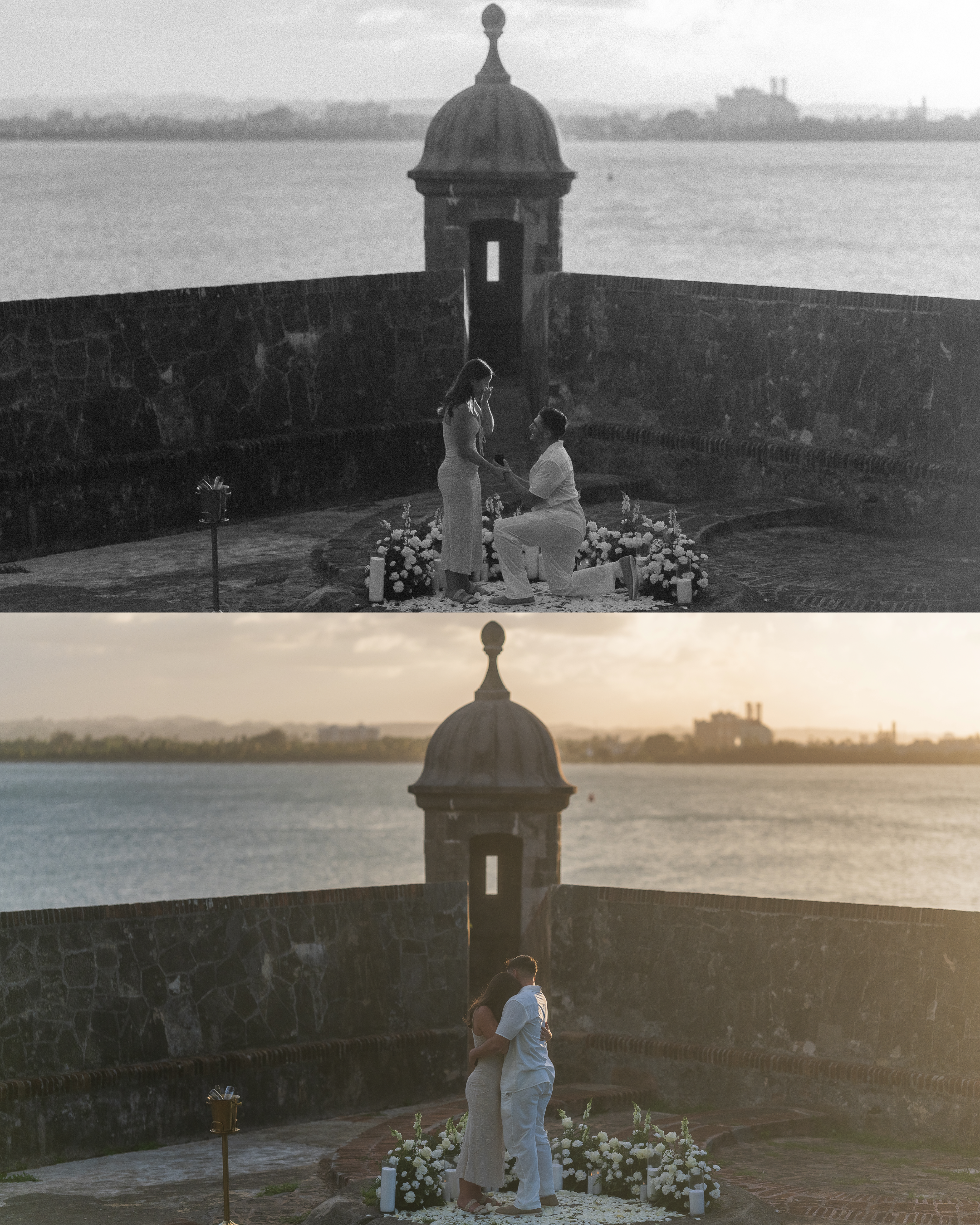
Puerto Rico gives me plenty to work with. The architecture, the colors, the Caribbean light, and the landscapes all become part of the photograph.
One of the biggest advantages of shooting primes for wedding and elopement photography is aperture.
My three primary primes are the Sigma 20mm f/1.4, Sigma 35mm f/1.2, and Sigma 85mm f/1.4.
Those apertures aren't just numbers printed on the side of a lens.
They fundamentally change what I can do with available light.
A wider aperture allows the lens to gather more light, which becomes particularly valuable when photographing weddings in challenging lighting conditions.
And Puerto Rico presents plenty of those situations.
A beautiful outdoor ceremony might take place under intense Caribbean sunlight. A couple may then move into a shaded historic street in Old San Juan. Later, portraits might happen during blue hour. Then the reception begins indoors, where the available light drops dramatically.
The ability to open a lens to f/1.2 or f/1.4 gives me significantly more flexibility.
I can maintain a lower ISO when appropriate.
I can use faster shutter speeds when I need them.
And I can continue working creatively in situations where a slower lens might force me to compromise.
This becomes especially important during elopements because the goal isn't simply to record what happened.
I'm trying to create something beautiful from whatever light is available.
Low-Light Performance in Puerto Rico
Puerto Rico has incredible natural light, but wedding photography isn't limited to golden hour.
Some of the most emotional photographs happen when the sun goes down.
Imagine a couple walking through Old San Juan after sunset. Imagine a candlelit dinner. Imagine a first dance under dim reception lighting. Imagine an intimate moment between a newly married couple while everyone else is celebrating around them.
These aren't necessarily environments where you have an abundance of light.
This is where fast primes become particularly useful.
A lens capable of opening to f/1.2 or f/1.4 allows me to work with available light in a way that simply isn't possible with slower apertures.
That doesn't mean I never use flash.
I love flash photography, and lighting is a major part of my creative process.
But having a fast prime means I have another option. Instead of relying entirely on artificial light, I can use the ambient light as part of the photograph.
That's a very different aesthetic.
Rather than fighting the darkness, I can incorporate it.
The Look of a Wide Aperture
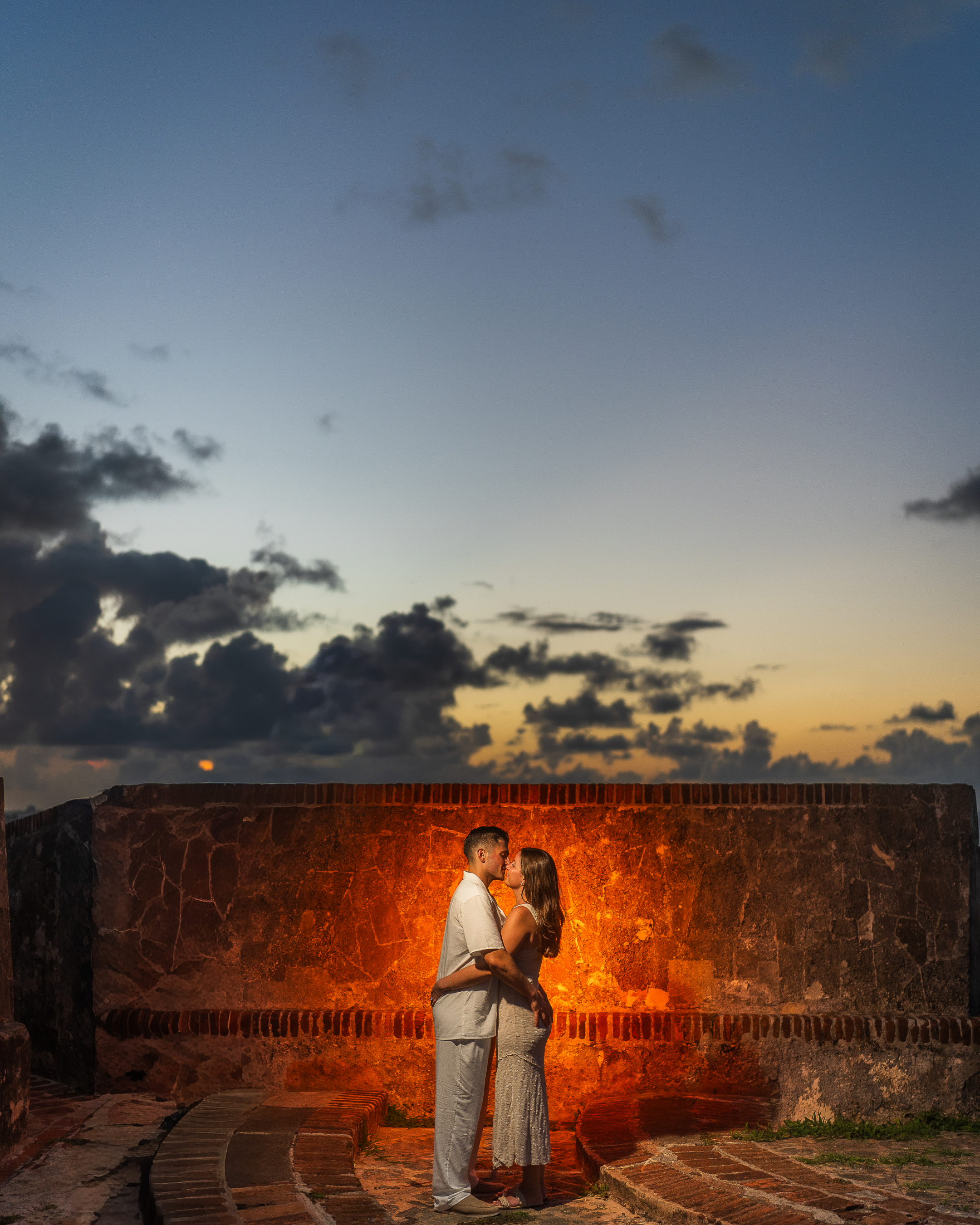
The 85mm f/1.4 is one of my favorite tools when I want to strip away distractions and put all the attention where it belongs: on the couple.
There is another reason I love shooting wide open: subject isolation.
When photographing couples, I want the viewer's attention to go exactly where I intend it to go.
Sometimes that's the couple.
Sometimes it's an expression.
Sometimes it's a hand holding a wedding ring.
Sometimes it's the bride's eyes.
A wide aperture can help separate the subject from the background, creating a shallower depth of field and a more pronounced sense of separation.
This can be particularly beautiful during an elopement because Puerto Rico provides incredible environments to work with.
Old San Juan has colorful architecture, cobblestone streets, balconies, doors, and historic buildings.
The beaches provide endless horizons, palm trees, water, and dramatic skies.
The mountains offer layers of landscape and atmospheric depth.
A fast prime allows me to photograph those environments while still making the couple the visual focal point.
The environment doesn't disappear.
It simply becomes part of the story.
Image Quality: Are Primes Actually Better?
This is where things get a little more nuanced.
It would be easy to say that prime lenses are simply sharper than zoom lenses.
That's not entirely accurate.
Modern professional zoom lenses can be exceptionally sharp. Some are so good that the difference between a high-quality zoom and a high-quality prime may be difficult to distinguish in real-world wedding photography.
But primes still have some important advantages.
Because a prime lens is designed around a single focal length, optical engineers can optimize its construction specifically for that perspective.
This can contribute to excellent sharpness, contrast, rendering, and overall optical performance.
And when you're combining that with extremely wide apertures, the result can be a very distinctive image.
For me, however, image quality isn't simply about pixel-level sharpness.
It's about how the photograph feels.
It's about contrast.
It's about depth.
It's about how the background renders.
It's about how light interacts with the lens.
And ultimately, it's about whether the photograph makes someone stop scrolling and actually look at it.
The twenty millimeter for Environmental Storytelling
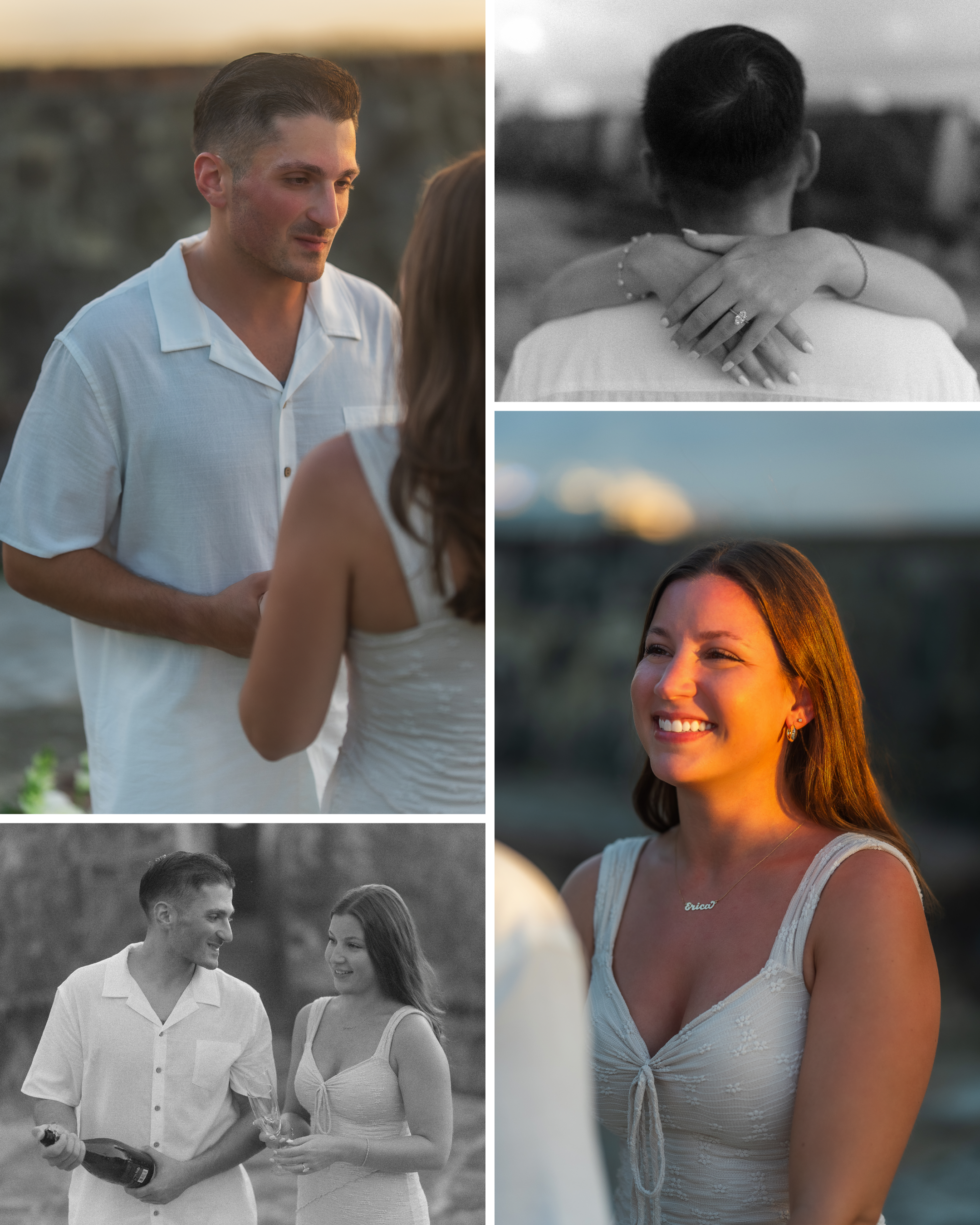
A prime lens doesn't give you every answer. Sometimes that's exactly the point.
My Sigma 20mm f/1.4 is an interesting lens because it's extremely wide, but that doesn't mean I use it simply to make everything look wider.
I use it for storytelling.
When I'm photographing an elopement in Puerto Rico, the location is often an important part of the experience.
The couple didn't travel thousands of miles to photograph themselves against a blank wall.
They came to Puerto Rico.
They came for the Caribbean light, the architecture, the ocean, the mountains, the history, the colors, and the atmosphere.
The 20mm allows me to put the couple into that environment.
It lets me exaggerate perspective, get close to my subjects, and create photographs where the location becomes part of the story.
But it also forces me to think carefully.
At 20mm, you can't simply point the camera at something and expect the photograph to work.
You have to pay attention to the edges of the frame.
You have to understand perspective.
You have to be conscious of where you place people.
You have to get close.
And getting close can create a completely different relationship between the photographer and the couple.
The thirtyfive millimeter: My Creative Sweet Spot
The 35mm focal length has become one of my favorite perspectives for wedding and elopement photography.
It is wide enough to show the environment but intimate enough to feel connected to the people inside the frame.
And when you combine that focal length with an f/1.2 aperture, it becomes an incredibly powerful creative tool.
The 35mm allows me to photograph a couple walking through Old San Juan, standing beneath a historic archway, sharing a quiet moment during their wedding day, or simply interacting naturally without making the photograph feel overly compressed.
It's also an excellent focal length for storytelling.
When I'm photographing an elopement, I don't just want portraits.
I want moments.
I want the little interactions between the big moments.
I want the way a couple looks at each other when they think nobody is watching.
I want the environment around them.
I want movement.
And I want the photograph to feel like you could step into it.
That's what the 35mm does exceptionally well for me.
The eightyfive millimeter: Compression and Intimacy
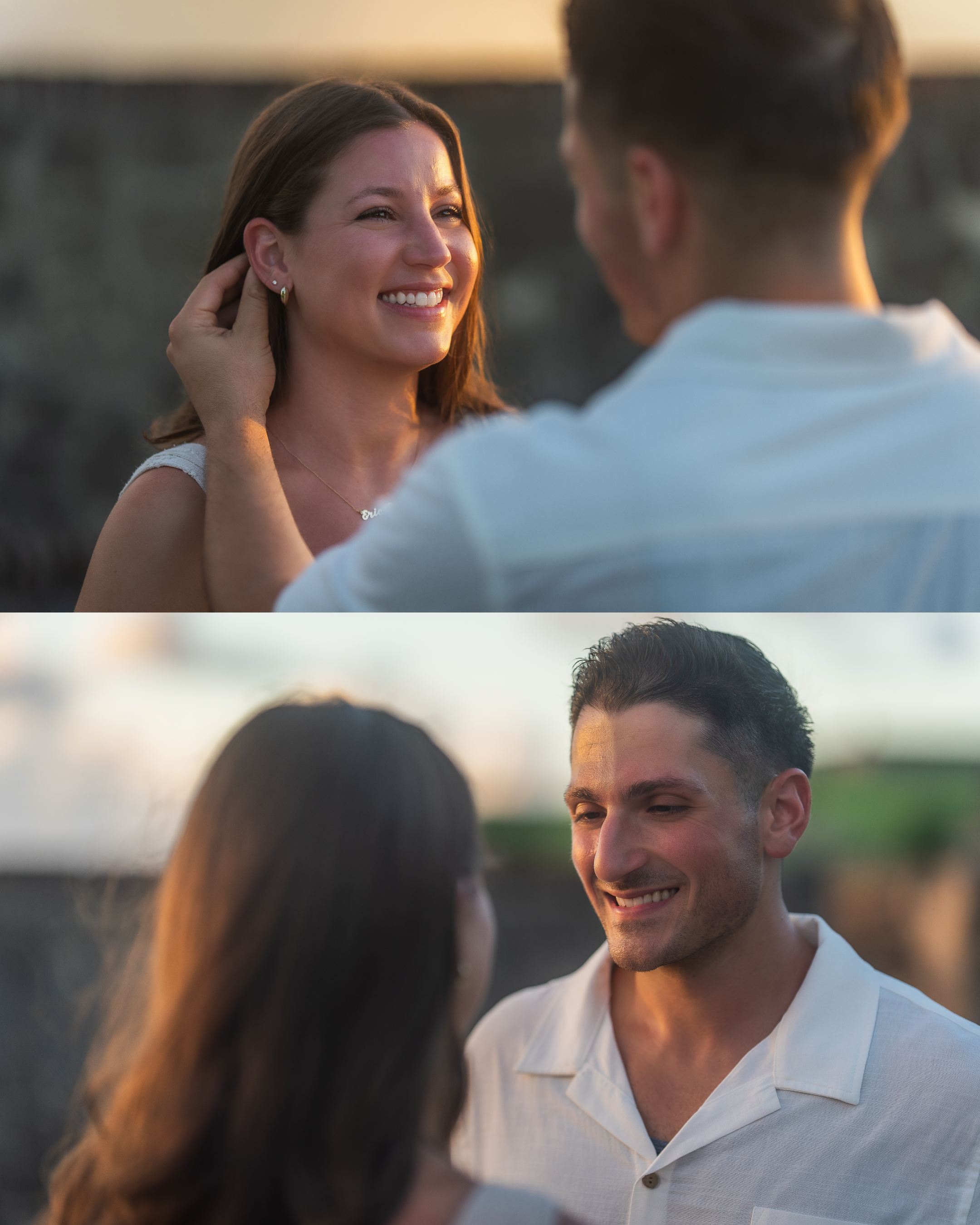
There's something incredibly satisfying about knowing exactly what a lens sees and learning how to make that perspective work for you.
Then there's the 85mm.
If the 35mm is about storytelling, the 85mm is about intimacy.
An 85mm lens allows me to isolate my subjects while compressing the background in a beautiful way.
This is especially useful for portraits.
A couple standing on a beach can suddenly become the unmistakable center of the photograph.
A busy street can transform into a soft, colorful background.
A mountain landscape can become layers of beautiful compression behind the couple.
And at f/1.4, that separation can become even more pronounced.
The 85mm also allows me to maintain some physical distance from the couple, which can sometimes produce more natural expressions.
Instead of being right in their faces, I'm able to give them a little space.
That can make a difference.
Some of the best photographs happen when couples forget they're being photographed.
Primes Force Me to Move
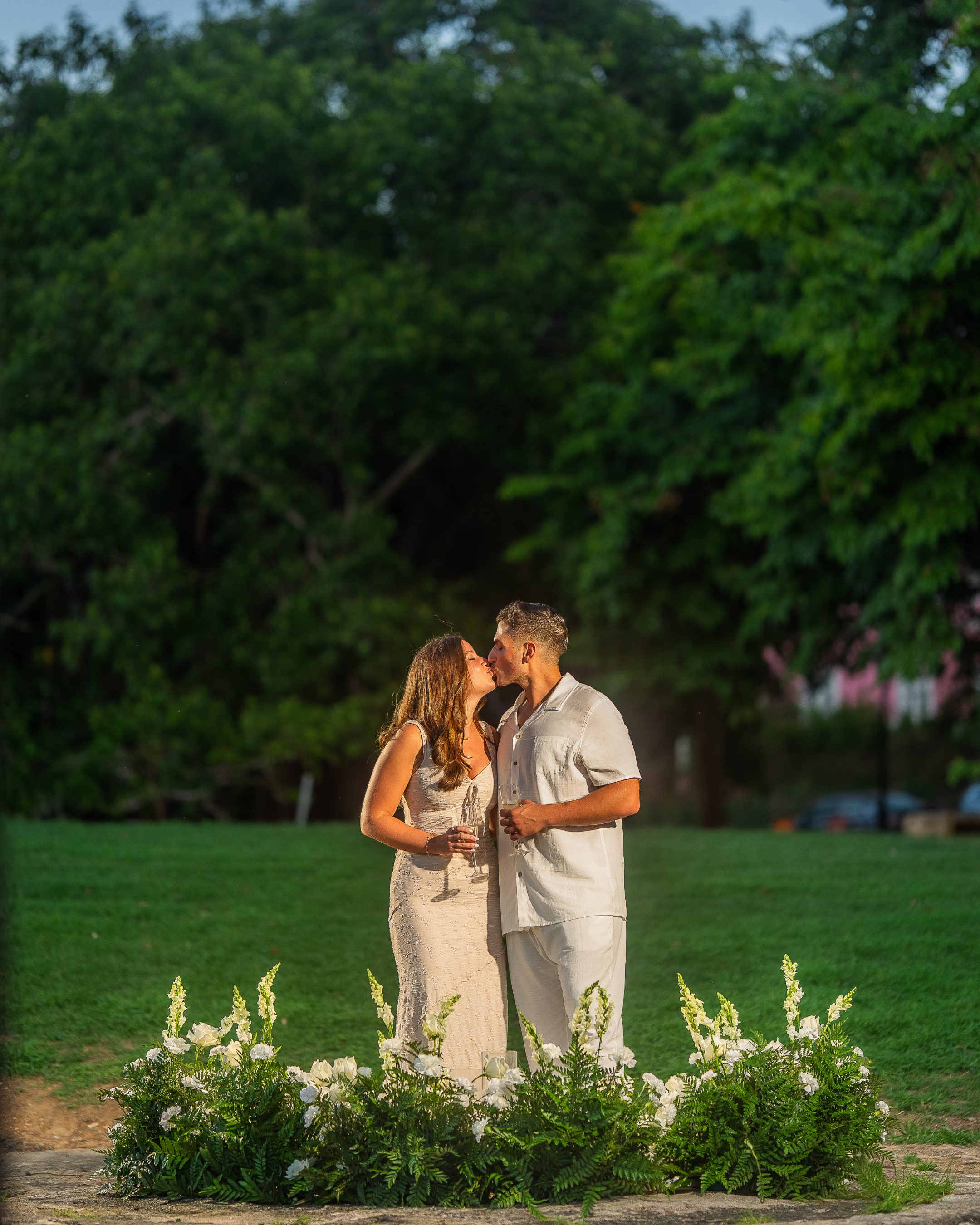
Getting physically closer to your subjects can change more than your composition. It can change the feeling of the photograph entirely.
Perhaps the biggest change I've experienced since switching to primes isn't technical at all.
It's physical.
I move more.
A lot more.
If I'm photographing with my 35mm and want a tighter portrait, I walk toward my subjects.
If I want more environmental context, I walk backward.
If the composition isn't working, I don't zoom.
I reposition myself.
That sounds incredibly simple, but it has changed the way I see photographs.
Instead of asking, "What focal length do I need?"
I'm asking, "Where do I need to be?"
That's a very different question.
And I think it makes me a better photographer.
Primes Incentivize Creativity
This is ultimately what my photographer friend meant.
Primes incentivize creativity because they introduce limitations.
And limitations can be incredibly useful.
When you have every focal length available, you can solve almost every compositional problem by changing the focal length.
When you have a 35mm lens, you have to figure out how to make the 35mm work.
That constraint forces creativity.
It makes me experiment.
It makes me look for different angles.
It makes me move.
It makes me think about foreground and background.
It makes me consider perspective.
And most importantly, it makes me engage with the environment rather than simply changing my lens settings until the composition looks right.
The Downsides of Shooting Primes
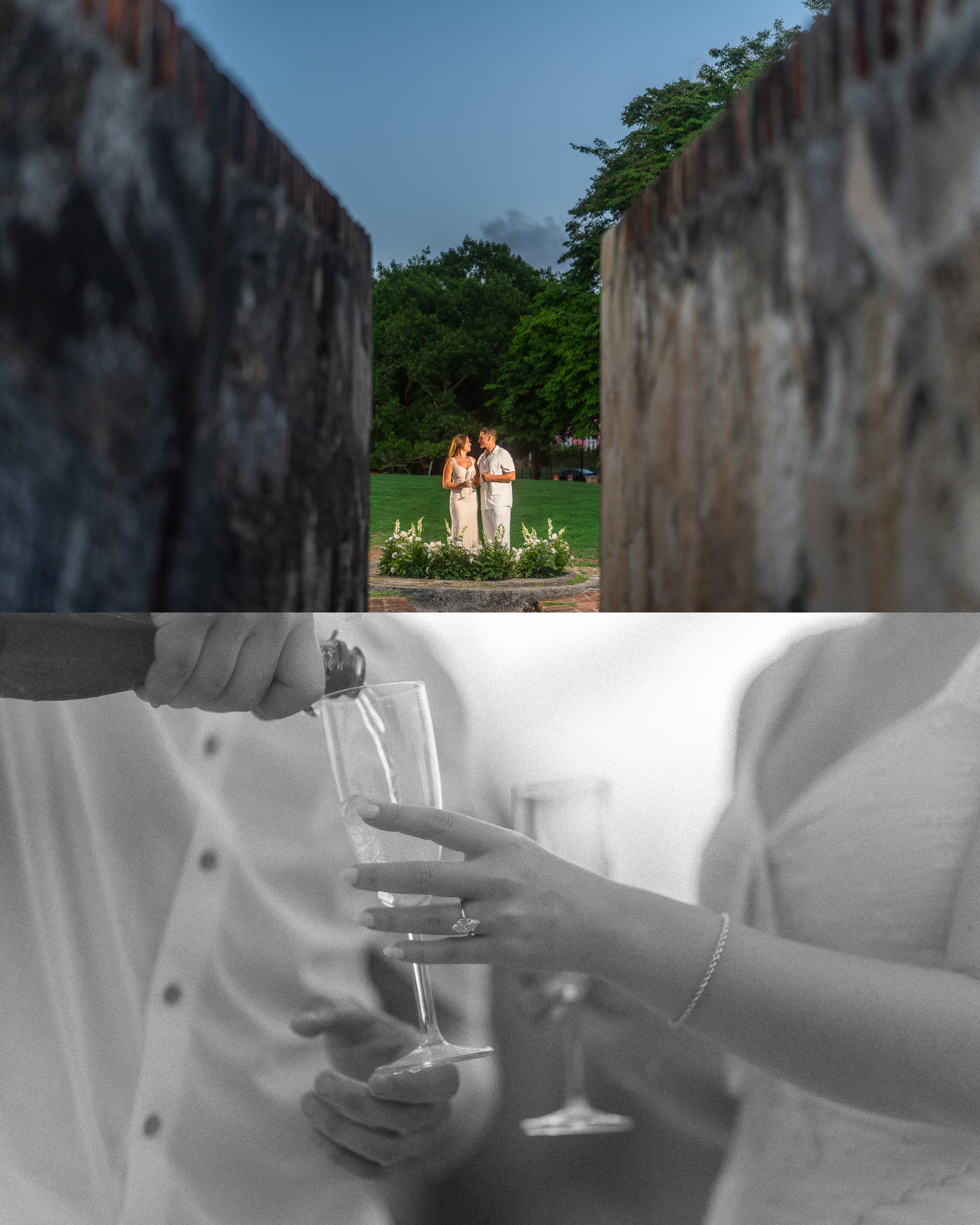
Some of my favorite photographs happen when I'm forced to slow down, look around, and find the image instead of simply zooming until I find a frame.
Of course, there are disadvantages.
I'm not going to pretend there aren't.
The biggest one is versatility.
A zoom lens can cover an enormous range of focal lengths without requiring a lens change.
With primes, I have to choose my perspective before I start shooting.
If I'm carrying my 20mm, 35mm, and 85mm, I have three lenses that cover three very different perspectives.
That means I either need to carry multiple camera bodies or be willing to change lenses.
During a wedding, that can be inconvenient.
There are also situations where a zoom simply makes more sense.
If I'm photographing a ceremony from a fixed position, for example, a 70-200mm can be incredibly useful.
If I'm photographing from the back of a church, I may not have the ability to physically move closer.
If I'm working in a rapidly changing environment, the flexibility of a zoom can save the day.
And this is why I haven't completely abandoned zooms.
I still own my 28-105mm f/2.8.
It's a fantastic lens.
But the fact that I own it doesn't mean I have to use it for everything.
Why I Still Keep a Zoom in My Bag
There is something to be said for having the right tool available even if it isn't the tool you reach for most often.
My 28-105mm f/2.8 is essentially my insurance policy.
If I know I'm going into a situation where versatility matters more than creativity, it's there.
If I need to react quickly, it's there.
If I'm working from a fixed position, it's there.
And if conditions change unexpectedly, I have an incredibly capable lens that can handle it.
That's the beauty of photography.
There isn't one correct way to photograph a wedding.
There isn't one correct focal length.
There isn't one correct camera system.
There isn't even one correct definition of what a "professional" kit should look like.
The best gear is ultimately the gear that allows the photographer to create the work they want to create.
For me, right now, that's primes.
Why This Matters for Puerto Rico Elopement Photography
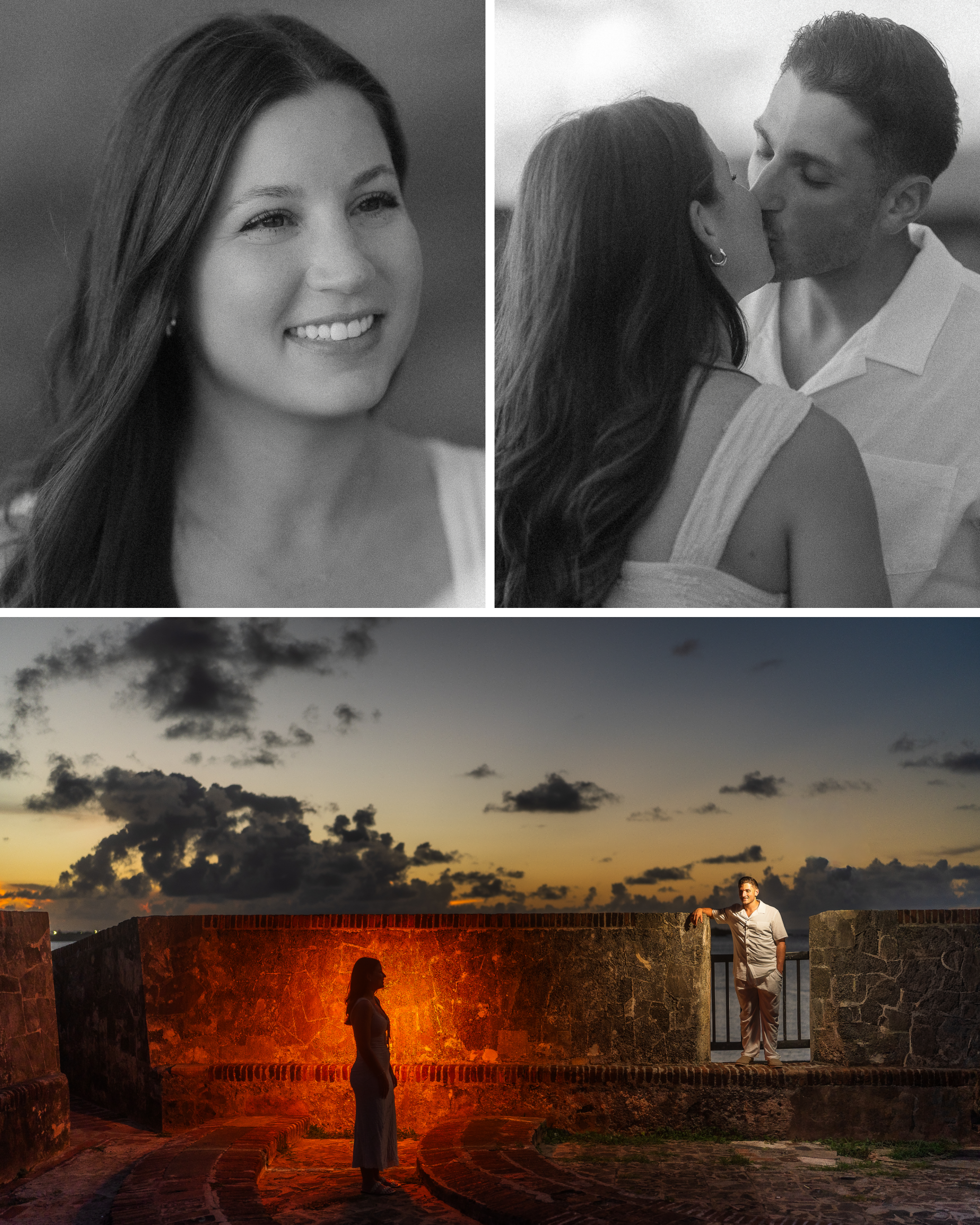
Gear matters, but the way you use it matters more. Sometimes limiting your options is exactly what you need to become more creative.
At first glance, all of this might sound like an overly technical discussion about lenses.
But for couples planning an elopement in Puerto Rico, the equipment I use ultimately matters because of what it allows me to create.
An elopement is different from a traditional wedding.
There may be fewer people.
There may be fewer formalities.
There may be more flexibility.
And there is often a much stronger emphasis on the experience itself.
That's exactly the kind of environment where I love working with prime lenses.
If we're walking through Old San Juan, I want to be able to create photographs that show the architecture while keeping you connected to each other.
If we're on a beach at sunset, I want to create intimate portraits with beautiful subject separation.
If we're exploring a mountain location, I want to incorporate the landscape without allowing it to overwhelm the photograph.
If we're photographing after sunset, I want the ability to take advantage of whatever ambient light is available.
And if something unexpected happens, I want to be physically engaged enough to see it and react to it.
The lens becomes part of that process.
The Camera Is a Tool. The Lens Changes How You See.
Ultimately, this entire transition started with one sentence.
"Zooms make me lazy and primes incentivize creativity."
I didn't immediately agree with it.
But I couldn't stop thinking about it.
And eventually, I realized that the statement wasn't really about zoom lenses.
It was about limitations.
It was about forcing yourself to think differently.
It was about removing some of the easy solutions and seeing what happens when you're forced to solve the problem creatively.
Since switching to Sony Alpha, I've built a prime-heavy kit around the Sigma 20mm f/1.4, 35mm f/1.2, and 85mm f/1.4.
I still have my 28-105mm f/2.8.
And I still appreciate what a good zoom lens can do.
But 99.9% of the time, I'm reaching for a prime.
Not because zoom lenses are bad.
Not because primes are automatically better.
And certainly not because every photographer should abandon their zooms.
I use primes because they make me move.
They make me think.
They make me experiment.
They make me look for photographs instead of simply framing them.
And after years of photographing weddings and couples, I've realized that sometimes the best thing you can do for your photography is to give yourself fewer options.
Because when the easy option disappears, creativity has a way of taking its place.
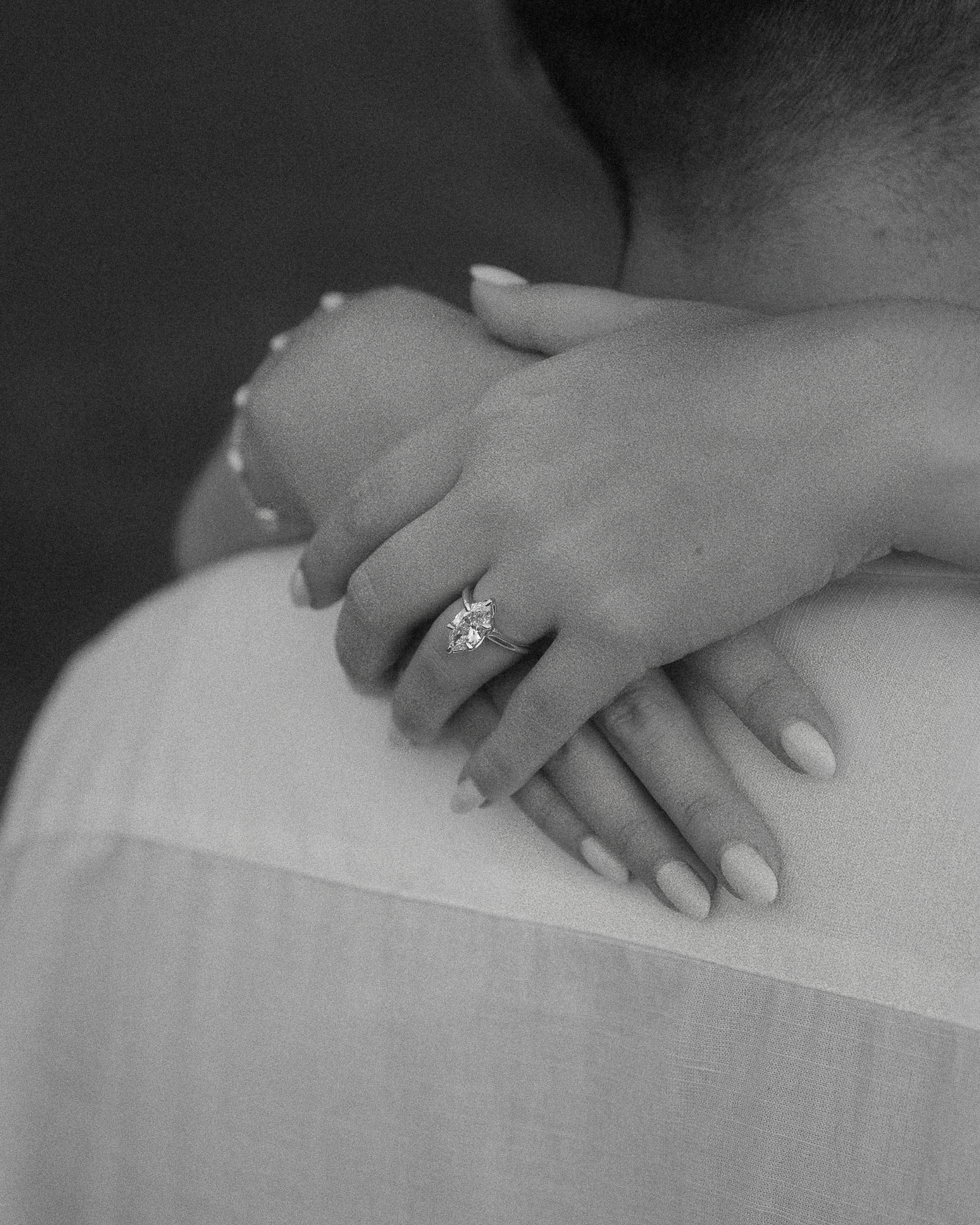
Wide apertures aren't just about creating beautiful bokeh. They're about making the most of available light and creating separation when the environment gets challenging.
